Author: bebaks

  • My baby died. How will I cope?

    My baby died. How will I cope?

    MY BABY DIED. HOW WILL I COPE?

    Material courtesy of March of Dimes (adapted for Kosovo)

    The death of a baby is one of the most painful things that can happen to a family. It’s so unfair. Babies aren’t supposed to die. They are the beginning of life, not the end.

    Your baby may have died in your womb, either early or later in your pregnancy. Or your baby may have died at birth or just after birth. You may be overwhelmed by your feelings. Know that you are not alone in your grief. We are so sorry for your loss. We hope we can help you come to deal with the death of your baby by reading these articles.

    The information here can help you and your family understand your grief and feelings and learn how to ask for help. It gives suggestions for dealing with family and friends while you’re grieving and how to help your other children understand your family’s loss.

    We also provide a guide for fathers who have experienced loss and for friends and family of someone who has experienced a loss.

    And finally, when you are ready, there are suggestions on how you and your family can remember your baby. We hope this helps you heal… and when you’re ready, think about the future.

    It’s important to take care of yourself

    • Eat healthy food. Eat fruits and vegetables, whole-grain breads and pastas, and low-fat chicken and meats. Stay away from junk food, fast food and too many sweets.
    • Do something active every day. Go for a walk. Get outside for a while.
    • Try to stick to your regular schedule. Get up and go to bed at your usual times.
    • Stay away from alcohol (beer, wine, wine coolers and liquor) and caffeine (in coffee, tea, soda and chocolate). These can make you feel bad and make it hard for you to sleep. Instead, drink water or juice.
    • Don’t smoke. Smoking is bad for you and your partner. Secondhand smoke (smoke from someone else’s cigarettes) is harmful, too.
    • Remember that a woman’s body needs time to get back to normal after pregnancy. If a woman was far along in her pregnancy, she may have some bleeding, and her breasts may have milk. If these things are happening to you or your wife, talk to your doctor.

    How can you share your feelings?

    • Talk about your baby and your feelings about your loss with your partner, family and friends.
    • Talk to your doctor to see if they can recommend a counselor. Sometimes it’s helpful to talk to someone other than your family and friends.
    • Talk to your religious or spiritual leader. Your spiritual beliefs may be a comfort to you during this time.
    • Contact your local Beba-ks Center to make a one-on-one, confidential appointment with a doctor or midwife.
    • Visit our online community to share your story and read about the experience of others; it might help to learn from others who have also experienced a loss.
    • Think about having a memorial service to remember your baby.
    • Read books and poems or listen to music that you like and find comforting.
    • Write your thoughts and feelings in a journal. You can even write letters or poems to your baby. Tell your baby how you feel and how much you miss her.
    • Make an album or memory box for keepsakes of your baby, like photos, a hospital bracelet or a blanket. Take time before making any changes
    • You may already have baby things, like clothes, blankets and furniture. Leave them where they are until you feel ready to put them away.
    • Try not to make big changes in your life (like moving to a new place or taking a new job) right after your baby dies. Wait a few months before you make changes like these. Give yourself time to grieve the loss of your baby.

    Where can you get help as you grieve?

    • Ask your friends and family for help. Tell them exactly what they can do for you. Ask them to help with childcare, go grocery shopping, make meals or just spend time with you.
    • Ask your doctor or contact your local Beba-ks Center for help if you think you’re depressed. Everyone feels sad and blue sometimes. These feelings may be stronger after the death of a baby. If your feelings of sadness are really strong, last for a long time and prevent you from leading your normal life, you may need treatment for depression. Here are some signs of depression:
    • Having little interest in your usual activities or hobbies
    • Feeling tired all the time
    • Gaining or losing weight
    • Having trouble sleeping or sleeping too much
    • Having trouble concentrating or making decisions
    • Thinking about suicide or death

    Dealing with others as you grieve

    It’s really hard to think about dealing with family and friends when you’re grieving. 

    You may wish people would go away and leave you alone. But your baby’s death affects your family and friends, too. They love you and want to help, but they may be afraid of saying or doing the wrong thing. They may feel helpless because they’re not sure how to comfort and support you. 

    Here are some tips to help you handle others while you’re grieving:

    • Tell them that their calls and visits are important to you.
    • Let them know if it’s OK for them to ask questions about what happened.
    • Tell them you want their support, even if they don’t know the perfect thing to say. Hearing honest words like, “I just don’t know what to say to make it better,” or “I want to help you but I don’t know how,” can be comforting. Sometimes people may say things that are not helpful to you like, “It was for the best.” Or “You can always have another baby.” Try to remember that they are doing their best to support you, even if what they say is hurtful.
    • Tell them exactly what you need. Do you just want someone to listen? Do you want them to spend time with you at home? Do you need someone to bring you a meal or do your laundry? Try and tell them specific things they can do to show their support. For example, they could take your children for an afternoon or do your grocery shopping.
    • Ask them to use your baby’s name and to remember your baby. Let them know that, even if you get pregnant again and have other children, you won’t forget the baby who died.
    • Thank them for their patience and support.

    Grief takes time. Some people may expect you to limit your grief or get over it in a certain amount of time. Take as much time as you need to cope with your loss. Even though you may feel better with time, you won’t forget your baby.

    As time goes by, support from your family and friends may lessen. This doesn’t mean they’ve forgotten about your baby or that they don’t care. You may need to tell them that you are still grieving. They will support you as long as they know you need it.

    How can you help children understand death and grief?

    Children of all ages grieve. They may be afraid, act out or need special attention. Some children may think that they’re going to die, too, or that they are to blame. They can cope better with grief when they know what’s happening. Here are some ways you can help them understand the baby’s death:

    • Talk with them about death using simple, honest words. You can say things like, “The baby didn’t grow,” or “The baby was born very tiny.” Don’t use words that may confuse or scare them, such as “The baby is sleeping,” or “Mommy lost the baby.”
    • Read them stories that talk about death and loss if you can find them.
    • Encourage them to ask questions. Give as much information as your child needs.
    • Be aware of changes in your children’s behavior. They may be hurt, confused and angry, just like you. Younger children may be clingy or cranky. They may act in ways or do things that they haven’t done since they were younger. Older children may be worried about school, friends or sports. Or they may show no reaction at all to the baby’s death. They also may ask questions that you think are rude or uncaring. These are normal reactions. Be as patient and loving as you can.
    • Tell them they are not going to die.
    • Tell them that no one is to blame for the baby’s death.
    • Ask them to find their own ways to remember the baby. Older children may want to go to the memorial service or funeral. Younger children can draw a picture or make a keepsake for the baby.
    • Tell your children’s teachers and other caregivers what has happened so they can support your children, too.

    A guide for fathers who have suffered a loss

    Material courtesy of First Candle

    This is likely one of the most difficult times in your life, but you may feel you have to be strong for your partner and your family. Our society tends to put men in a supporting role when it comes to the death of a baby, but you are grieving too. How you cope with your grief will be important as you try to heal and move forward. No two people grieve alike. There is no right or wrong way to grieve. Take time to find out what works for you. Following are suggestions from other bereaved fathers that you may find helpful:

    • Experience your grief. Find a quiet place where you can be alone with your thoughts and your pain. This will help you sort out the “what ifs” and “whys” echoing in your head.
    • Cry. Crying is a normal and necessary response to grief, even for men. Crying can make you feel better by relieving tension from within your body. If you are not comfortable crying in from of others, find a place where you can be alone and release your emotions.
    • Accept that this is not something you can “make better”. Everyone’s grief and healing will take time and will ebb and flow in unpredictable ways. Be patient with yourself and those around you.
    • Talk about your feelings. Reach out to family members or trusted friends and let them know you just need someone to listen. This includes your wife.
    • Express your anger in positive ways. For men, anger is probably the most common emotional reaction to the death of a baby. Exercise or other physical activities are good choices.
    • Try not to over-involve yourself in sports, hobbies, work or social activities. This will only bury your feelings. Give yourself space to work on your grief. There will be plenty of time for these activities when you are in a better place and on the road to healing.
    • Avoid the use of alcohol, drugs or sex outside your relationship to help numb the pain. The high is temporary; reality will step back in very quickly.

    For more advice and information you can download First Candle’s “Surviving Stillbirth for Fathers” brochure here.

    A guide for friends and family members of someone that has suffered a loss

    Material courtesy of First Candle

    If someone you care about has experienced the death of a baby, there are things that you can do to help them through the grieving process and cope with the death of their baby. The avoidance by friends and family, unsure of what to say or do, only adds to the pain and isolation felt by bereaved parents. The following suggestions are offered to assist you:

    Dos

    Don’ts

    • Do get in touch. Let your genuine concern and caring show.
    • Do be available to listen, to help with the other children, or whatever else seems needed at the time. Offer help with practical matters like house cleaning and meals.
    • Do say you are sorry about what happened to their baby and about their pain.
    • Do allow them to express as much grief as they are feeling at the moment and are willing to share. Accept silence; if the family doesn’t feel like talking, don’t force conversation. Follow their lead.
    • Do encourage them to be patient with themselves, not to expect too much of themselves and not to impose any “shoulds” on themselves.
    • Do allow them to talk about their baby.
    • Do give special attention to the siblings of the baby that died.
    • Do reassure them that they did everything that they could, the medical care they received was the best, or whatever else you know to be true and positive about the care given their pregnancy or baby.
    • Do encourage them to seek outside help, either from a health professional or another bereaved parent.
    • Do remember the family on the baby’s birthday, anniversary of death, Mother’s and Father’s days, and other occasions.
    • Do be patient with them. Coping with the death of their baby may take a long time. Stay in touch.
    • Don’t let your own sense of helplessness keep you from reaching out to the bereaved family.
    • Don’t avoid the family because you are uncomfortable.
    • Don’t say you know how they feel (unless you’ve lost a child yourself, you probably don’t know how they feel).
    • Don’t probe for details about the baby’s death. If the family offers information, listen with understanding.
    • Don’t tell them what they should feel or do.
    • Don’t impose your religious or spiritual views on them.
    • Don’t change the subject when they mention their dead child.
    • Don’t point out that at least they have another child; or could have more children in the future.
    • Don’t blame anyone for the death. Don’t make comments which suggest that the care at home, at the childcare provider’s, in the emergency room, hospital or wherever was inadequate.
    • Don’t try to find something positive about the baby’s death. Avoid clichés and easy answers.
    • Don’t avoid mentioning the baby’s name out of fear of reminding them of their pain.
    • Don’t say “you ought to be feeling better by now” or anything else which implies a judgment about their feelings, or sets time expectations or limits
    • their healing process.

    Remembering your baby

    When you are ready, it’s important for you and your family to remember your baby in ways that are special. Even if you may not have had the chance to see, touch or hold him or even give him a name, there are things you can do to help you remember your baby.

    Collect things that remind you of your baby. These might be ultrasound pictures, footprints, a hospital bracelet, photos, clothes, blankets or toys. Put them in a special box or scrapbook. Do or make something special to remember your baby. You may want to:

    • Light a candle on special days and holidays.
    • Say a prayer.
    • Write a poem.
    • Paint a picture.
    • Plant a tree or a small garden.
    • Have a piece of jewelry made, perhaps with the baby’s birthstone.
    • Donate to a charity or give something to a needy child who is about the same age as your baby would be.
    • Get involved in a special project dedicated to your baby, such as raising money to build a swing set in a park in your baby’s name, or volunteer for a local charity.
    • Have a service to honor your baby. This can be a memorial service or funeral. It can be at your home or at your place of worship. It can be with just a few people or with all friends and family. It may include burying your baby or spreading his ashes in a special place. A service can give you a chance to say goodbye to your baby. And it gives you a time to share your sorrow with family and friends.
    • Have a special time to remember. Pick a date that’s meaningful to you–your baby’s birthday or the day he died. Do something on your own, or bring family and friends together to remember your baby.
  • What are my options if my husband is abusive?

    What are my options if my husband is abusive?

    WHAT ARE MY OPTIONS IF MY HUSBAND IS ABUSIVE?

    There is no excuse for domestic violence. Ever.

    Attitudes and responses to domestic violence are slowly improving in Kosovo. Police and the courts are better trained to respond and Victim’s Advocates, Centers for Social Welfare, and shelters all appear to be doing a better job at dealing with this immense problem.

    What should you do if you or someone you know is a victim of domestic violence?

    If you experience or witness assault, we encourage you to call the police, especially if it is an emergency. You can also call the free help line number: 0800 11112. This is run by the Victim’s Assistance and Advocacy division of the Kosovo Public Prosecutor’s Office. The people who answer help victims of domestic violence or people who report any such violence, by supplying them with information and contact numbers.

    Keep in mind that under Kosovo law “failing to report child abuse or domestic violence is a criminal offence, and anyone who fails to report criminal offences occurring within a domestic relationship can be held criminally liable.” (Kosovo Women’s Network 2015, ‘No More Excuses’, See Art. 385, failure to report preparation of criminal offenses, paragraph 3)

    What are your legal rights?

    Material courtesy of OSCE “Catalogue of Advice and Assistance for Domestic Violence Victims”

    Under the Kosovo Law on Protection against Domestic Violence, acts of domestic violence are defined as intentional acts or omissions when committed by a person against another person with whom the person is in a domestic relationship. This includes anyone you currently share, or previously shared, a household with. These acts include, but are not limited to, a) use of physical force or psychological pressure; b) inflicting or threatening to inflict physical pain or psychological suffering on another family member; c) causing the feeling of fear or threat of dignity; d) physical assault; e) insult, offense, calling by offensive names, and other forms of violent intimidation; f) repetitive behaviors with the aim to denigrate the person; g) non-consensual sexual acts; h) unlawful limiting of the freedom of movement of the other person; i) damaging the property or threatening to damage the property of another family member; j) causing the other person to fear for his or her physical, emotional or economic wellbeing; k) forcibly entering or removing from a common residence the other family member; and l) kidnapping. (Law No. 03/L-182 on Protection against Domestic Violence, 2010, at: http://www.assembly- kosova.org/common/docs/ligjet/2010-182-eng.pdf.

    Art. 2, paragraph 1.2.)

    The Law on Protection against Domestic Violence provides a set of legal measures aiming to protect domestic violence victims. The law defines concepts such as domestic violence and domestic relationships and explains which kind of protection measures and orders exist as well as the procedures to follow in order to obtain them.

    How does the law protect you and/or your children against domestic violence?

    Material courtesy of OSCE “Catalogue of Advice and Assistance for Domestic Violence Victims”

    Protection measures are measures issued by a court or the police to protect a person who is exposed to violence by changing the circumstances which may allow the perpetrator to commit more acts of violence. Protection measures can limit perpetrators from visiting their places of residence and can prohibit perpetrators from seeing their children, in addition to other measures. These measures are issued for the duration of a protection order. Once protection measures end, they will no longer affect the property rights or the custody rights of the perpetrator.

    A municipal court can issue protection orders or emergency protection orders containing one or more protection measures. Kosovo police can issue temporary emergency protection orders containing only some of the protection measures.

    A petition for a protection order can be submitted by:

    • A victim of domestic violence;
    • An authorized representative of the victim;
    • A victim’s advocate (upon consent of the protected party);
    • A representative of the center for social welfare of the municipality where the victim permanently or temporarily resides, when the victim is a minor;
    • A non-governmental organization (NGO) that is familiar with the situation of the victim.

    Kosovo police are responsible for ensuring that the perpetrator obeys the protection measures. A violation of a protection order is a criminal offense, and the violator will be sentenced to a fine and imprisonment.

    To read the full report by OSCE, “Catalogue of Advice and Assistance for Domestic Violence Victims” go to: http://www.osce.org/kosovo/88708?download=true

    What are the responsibilities of the police?

    Material courtesy of OSCE “Catalogue of Advice and Assistance for Domestic Violence Victims”

    Kosovo police are responsible for responding to any report of acts or threats to commit acts of domestic violence or to any violation of a protection order, an emergency protection order, or a temporary protection order, regardless of who reports it. The police will complete an incident report whether or not a crime was committed or an arrest was made, and will provide a copy of the report to the victim or legal representative.

    Apart from issuing temporary emergency protection orders, Kosovo police are responsible for using reasonable means to protect domestic violence victims and prevent further violence, such as:

    • Establishing a special phone line for reporting domestic violence cases;
    • Providing the victim or the victim’s legal representative with the official contact of the investigating police officer in cases where the victim needs further assistance; In case there is no investigating police officer, any other officer will assist the victim;
    • Informing the victim, legal representative, or victim’s advocate about the rights of the victim pursuant to the law on domestic violence, including the right to request a temporary emergency protection order;
    • Informing the victim about legal, psychological, and other assistance available from government institutions as well as from the authorized network of NGOs;
    • Informing relevant service providers regarding the incident of domestic violence and facilitating contact with the victim, upon the victim’s request;
    • Providing transport for the victim and, when necessary, the victim’s dependents to: [The text ends abruptly here and does not include the full information.]

    What is a shelter and what are their services?

    Material courtesy of OSCE “Catalogue of Advice and Assistance for Domestic Violence Victims”

    A shelter is a safe place where domestic violence victims and their children can temporarily stay and which provides protection and other services. Currently, there are shelters in Gjakova/Đakovica, Gjilan/Gnjilane, Mitrovicë/Mitrovica, Pejë/Peć, Prishtinë/Priština, and Prizren that host victims from communities all over Kosovo.

    Victims can stay in the shelter for six months. This can be extended upon agreement with the Ministry of Labour and Social Welfare.

    Shelters usually provide victims with accommodation, food, clothing, counseling (psychosocial and legal advice), medical support, vocational trainings (language, computer, internet, reading and writing, sewing, cooking, hairdressing, tailoring), health education, job-seeking services, and activities for children (music, drawing, dancing) among other services. The shelters are patrolled by the police and have various other security arrangements.

    Some shelters also contribute to preventing domestic violence by organizing awareness-raising activities and outreach visits to rural areas. Some shelters are also involved in monitoring and advocating for a legal and policy framework in Kosovo that is properly funded and that protects domestic violence victims. Some others conduct regular visits to the victims, once they return to their families or become independent.

    How can I help a friend or family member who is a victim of domestic violence?

    • Talk to the abuse victim person and ask how you can help. If old enough, encourage them to reach out for support and counseling. Remind them it is not their fault. No one deserves to be abused.
    • Don’t judge and don’t tell the victim what to do. Listen to and believe what they say. Be patient.
    • Often, victims of domestic violence are isolated and without support. Help to develop or keep their outside contacts.
    • Help her and her children to stay safe. Talk to her about ways she can do this and encourage her to think of ways herself.
    • Call the free help line, 0800 11112, to get more information about what can be done. This might be safer than trying to directly intervene, which can be dangerous for both you and the victim. If you are worried about reprisals, clear your phone call history after making any such calls.

    For more information:

    • Call the free help line number: 0800 11112, run by the Victim’s Assistance and Advocacy division of the Kosovo Public Prosecutor’s Office for more information and contact numbers.
    • You will find the address, email, and phone number of all the public institutions (like Victims Advocacy Officers), shelters, and NGOs working on domestic violence issues in each municipality of Kosovo on pages 24-54 of the OSCE’s “Catalogue of Advice and Assistance for Domestic Violence Victims.”
    • Kosovo Women’s Network has been at the forefront of serving, protecting, and promoting the rights of women and girls in Kosovo since 1996. You can read their report, “No More Excuses” by clicking here.
  • Domestic Violence

    Domestic Violence

    DOMESTIC VIOLENCE

    Domestic violence (also known as intimate partner violence or abuse), is never okay. Unfortunately, many women and children experience abuse. During pregnancy and new motherhood, women are in a particularly vulnerable state. Research shows that more than 30% of domestic violence starts in pregnancy, and existing abuse may get worse during pregnancy or after giving birth (NHS-UK).

    What is domestic violence?

    Domestic violence can be done by anyone, but most often it is men who commit abuse against women and children. However, mothers are almost as likely as fathers in Kosovo to commit violence (albeit less physically severe) against their young children in Kosovo. 

    Abuse can come in many forms:physical, sexual, emotional or psychological abuse.

    For example, an abusive partner may cause emotional pain by calling you names or constantly blaming you for something you haven’t done. An abuser may try to control your behavior by not allowing you to see your family and friends, or by always telling you what you should be doing. Emotional abuse may lead you to feel scared or depressed, eat unhealthy foods, or pick up bad habits such as smoking or drinking.

    An abusive partner may try to hurt your body. This physical abuse can include hitting, slapping, kicking, choking, pushing or even pulling your hair. Sometimes, an abuser will aim these blows at a pregnant woman’s belly. This kind of violence not only can harm you, but it also can put your unborn baby in grave danger.

    Sexual abuse includes being forced to have sex (non-consensual sexual acts) and sexual ill-treatment.

    How do you know if you’re in an abusive relationship?

    It’s common for couples to argue now and then. But violence and emotional abuse are different from the minor conflicts that couples have. Ask yourself:

    • Does my partner always put me down and make me feel bad about myself?
    • Has my partner caused harm or pain to my body?
    • Does my partner threaten me, the baby, my other children or himself?
    • Does my partner blame me for his actions? Does he tell me it’s my own fault he hit me?
    • Is my partner becoming more violent as time goes on?
    • Has my partner promised never to hurt me again, but still does?

    If you answered “Yes” to any of these questions, you may be in an unhealthy relationship.

    Source: March of Dimes

    How common is domestic violence in Kosovo?

    It is unfortunately very common in Kosovo:

    • Over 40% of women (and less than 10% of men) said they suffered domestic violence in 2015. (Kosovo Women’s Network 2015, ‘No More Excuses’)
    • Three in every five children under two years old experience psychological aggression or physical punishment in Kosovo. The rate is similar for children up to 14 years old. (The Kosovo Agency of Statistics 2014, ‘2013-2014 Kosovo Multiple Indicator Cluster Survey’)

    Despite most Kosovars believing that domestic violence is a shameful behavior, it is ‘normalized’ in Kosovo, meaning it is accepted and/or overlooked. For example, one in three women (aged 15-49 years) believes a husband is justified in hitting or beating his wife in at least one of the following circumstances: (1) she goes out without telling him, (2) she neglects the children, (3) she argues with him, (4) she refuses having sex with him, (5) she burns the food. The poorer and less educated you are in Kosovo, the more likely you are to think domestic violence is acceptable. For women with no formal education the rate of acceptance to domestic violence is almost 80%. (The Kosovo Agency of Statistics, 2014. ‘2013-2014 Kosovo Multiple Indicator Cluster Survey.’)

    Domestic violence during pregnancy

    Is abuse dangerous to my unborn baby?

    Yes, it is dangerous, especially if you are hit in the stomach. According to research from the World Health Organization, domestic violence during pregnancy is linked to higher rates of risk of miscarriage (when your baby dies before 20 weeks pregnancy), low birth weight babies (babies born less than 2.5kg) and premature birth (babies born before 37 weeks pregnancy) which causes numerous short and long-term health risks for the baby. Domestic violence can also cause injury to, or the death of, your unborn baby.

    How does abuse affect the pregnant woman?

    In addition of being dangerous to your baby, domestic violence during pregnancy is dangerous to the mother. In addition to physical injuries, pregnant women subject to abuse experience “higher levels of depression, anxiety and stress, as well as suicide attempts, lack of attachment to the child and lower rates of breastfeeding.”

    “Intimate partner violence during pregnancy is significantly associated with a number of adverse health behaviors during pregnancy, including smoking, alcohol and substance abuse, and delay in prenatal care.” (World Health Organization, “Intimate partner violence during pregnancy: Information sheet”)

    What can trigger abuse during pregnancy?

    For many families, pregnancy can bring about feelings of stress, which is normal. But it’s not okay for your partner to react violently to stress. Some partners become abusive during pregnancy because they feel:

    • Upset because this was an unplanned pregnancy.
    • Stressed at the thought of financially supporting a first baby or another baby.
    • Jealous that your attention may shift from your partner to your new baby, or to a new relationship.

    Domestic violence after birth

    Violence against women

    If a woman experiences abuse during pregnancy, it is likely that the abuse will continue after the child is born. The results of such violence for the woman includes include body injuries, permanent disability, and possibly death either at the hand of the perpetrator or themselves (suicide). Victims of domestic violence are more likely to suffer from anxiety, depression and postnatal depression, and fear. This can make it very difficult for women to properly care for their children or themselves. In Kosovo, 80% of women who suffered domestic violence said they had health problems directly resulting from violence. (Kosovo Women’s Network 2015, ‘No More Excuses’)  

    Violence against children

    If a woman is subject to domestic violence, it is more likely her child will also be subject to violence. According to BabyCenter.com, “Research shows that child abuse occurs in anywhere from one-third to more than three-quarters of families in which a partner is also being abused. And even if the child is not abused directly, studies show that children who witness one adult abusing the other within the home are at risk of becoming violent themselves or entering into a violent relationship when they grow up. They’re also at high risk for depression and many other psychological and behavioral problems.” (see https://www.babycenter.com/0_domestic-violence-during-pregnancy_1356253.bc?showAll=true)

    “Studies have found that exposing children to violent discipline have harmful consequences, which range from immediate impacts to long-term harm that children carry forward into adult life. Violence hampers children’s development, learning abilities and school performance; it inhibits positive relationships, provokes low self-esteem, emotional distress and depression; and, at times, it leads to risk taking and self-harm.” (The Kosovo Agency of Statistics 2014, ‘2013-2014 Kosovo Multiple Indicator Cluster Survey’).

    “KWN’s 2008 research found that respondents who had suffered violence as children, were less likely to have university degrees as compared to those who did not suffer violence; were more likely to be unemployed; and had lower total household incomes. Further, respondents who had suffered violence early in childhood were more prone to suffer violence later in life.” (Kosovo Women’s Network 2015, ‘No More Excuses’)

    Today, fewer Kosovars believe spanking a child is an acceptable form of discipline, but about one-third still believe it is OK. Women are more than twice as likely as men to yell at their child or spank them as a form of discipline. This underscores the fact that it is not just the man who commits violence against their children. (Kosovo Women’s Network 2015, ‘No More Excuses’) This could be result of their own history as a victim of abuse and the additional pressures of motherhood since they do most of the constant and demanding care of young children. Men, however, typically inflict more serious violence on children than women.

    What can you do if you or someone you know suffers from domestic violence in Kosovo?

    There is no excuse for domestic violence. Ever.

    Attitudes and responses to domestic violence are slowly improving in Kosovo. Police and the courts are better trained to respond and Victim’s Advocates, Centers for Social Welfare and shelters all appear to be doing a better job at dealing with this immense problem.

    What should you do if you or someone you know is a victim of domestic violence?

    If you experience or witness assault we encourage you to call the police, especially if it is an emergency. You can also call the free help line number: 0800 11112. This is run by the Victim’s Assistance and Advocacy division of the Kosovo Public Prosecutor’s Office. The people who answer help victims of domestic violence, or people who report any such violence, by supplying them with information and contact numbers.

    Keep in mind that under Kosovo law “failing to report child abuse or domestic violence is a criminal offence, and anyone who fails to report criminal offences occurring within a domestic relationship can be held criminally liable.” (Kosovo Women’s Network 2015, ‘No More Excuses’, See Art. 385, failure to report preparation of criminal offenses, paragraph 3)

    What are your legal rights?

    Material courtesy of OSCE “Catalogue of Advice and Assistance for Domestic Violence Victims”

    Under the Kosovo Law on Protection against Domestic Violence, acts of domestic violence are defined as intentional acts or omissions when committed by a person against another person with whom the person is in a domestic relationship. This includes anyone you currently share, or previously shared, a household with. These acts include, but are not limited to, a) use of physical force or psychological pressure; b) inflicting or threatening to inflict physical pain or psychological suffering on another family member; c) causing the feeling of fear or threat of dignity; d) physical assault; e) insult, offence, calling by offensive names, and other forms of violent intimidation; f) repetitive behaviours with the aim to denigrate the person; g) non-consensual sexual acts; h) unlawful limiting of the freedom of movement of the other person; i) damaging the property or threatening to damage the property of another family member; j) causing the other person to fear for his or her physical, emotional or economic wellbeing; k) forcibly entering or removing from a common residence the other family member; and l) kidnapping. (Law No. 03/L-182 on Protection against Domestic Violence, 2010, at: http://www.assembly- kosova.org/common/docs/ligjet/2010-182-eng.pdf.

    Art. 2, paragraph 1.2.)

    The Law on Protection against Domestic Violence provides a set of legal measures aiming to protect domestic violence victims. The law defines concepts such as domestic violence and domestic relationships and explains which kind of protection measures and orders exist as well as the procedures to follow in order to obtain them.

    How does the law protect you and/or your children against domestic violence?

    Material courtesy of OSCE “Catalogue of Advice and Assistance for Domestic Violence Victims”

    Protection measures are measures issued by a court or the police to protect a person who is exposed to violence by changing the circumstances which may allow the perpetrator to commit more acts of violence. Protection measures can limit perpetrators from visiting their places of residence and can prohibit perpetrators from seeing their children, in addition to other measures. These measures are issued for the duration of a protection order. Once protection measures end, they will no longer affect the property rights or the custody rights of the perpetrator.

    A municipal court can issue protection orders or emergency protection orders containing one or more protection measures. Kosovo police can issue temporary emergency protection orders containing only some of the protection measures.

    A petition for a protection order can be submitted by:

    • A victim of domestic violence;
    • An authorized representative of the victim;
    • A victim’s advocate (upon consent of the protected party);
    • A representative of the centre for social welfare of the municipality where the victim permanently or temporarily resides, when the victim is a minor;
    • A non-governmental organization (NGO) that is familiar with the situation of the victim.

    Kosovo police are responsible for ensuring that the perpetrator obeys the protection measures. A violation of a protection order is a criminal offence and the violator will be sentenced to a fine and imprisonment.

    To read the full report by OSCE, “Catalogue of Advice and Assistance for Domestic Violence Victims” go to: http://www.osce.org/kosovo/88708?download=true

    What are the responsibilities of the police?

    Material courtesy of OSCE “Catalogue of Advice and Assistance for Domestic Violence Victims”

    Kosovo police are responsible for responding to any report of acts or threats to commit acts of domestic violence or to any violation of a protection order, an emergency protection order or a temporary protection order, regardless of who reports it. The police will complete an incident report whether or not a crime was committed or an arrest was made, and will provide a copy of the report to the victim or legal representative.

    Apart from issuing temporary emergency protection orders, Kosovo police are responsible for using reasonable means to protect domestic violence victims and prevent further violence, such as:

    • Establishing a special phone line for reporting domestic violence cases;
    • Providing the victim or the victim’s legal representative with the official contact of the investigating police officer in cases where the victim needs further assistance; In case there is no investigating police officer, any other officer will assist the victim;
    • Informing the victim, legal representative or victim’s advocate about the rights of the victim pursuant the law on domestic violence, including the right to request a temporary emergency protection order;
    • Informing the victim about legal, psychological and other assistance available from government institutions as well as from the authorized network of NGOs;
    • Informing relevant service providers regarding the incident of domestic violence and facilitating contact with the victim, upon the victim’s request;
    • Providing transport for the victim and, when necessary, the victim’s dependants to:

    • An appropriate medical facility for treatment or medical examination;

    • A shelter or other suitable safe haven, upon the request of the victim;

    • Providing protection to the person who reports the incident, if needed, in accordance with relevant legal obligations regarding the protection of witnesses;
    • Removing the perpetrator from the temporary or permanent residence of the victim or a portion thereof (in regard to the protection measure of removal from apartment, house or other living premises).

    In addition, police must immediately report the incident to the centre for social welfare of the municipality where the person permanently or temporarily resides in the cases where:

    • The victim is a person under the age of 18 or a person who does not have the capacity to act on his or her own;
    • The acts of domestic violence are so serious that they impact the safety or security of a person under the age of 18 or that of a person who does not have the full capacity to act and who is living in the same residence as the perpetrator.

    What is a shelter and what are their services?

    Material courtesy of OSCE “Catalogue of Advice and Assistance for Domestic Violence Victims”

    A shelter is a safe place where domestic violence victims and their children can temporarily stay and which provides protection and other services. Currently there are shelters in Gjakova/Đakovica, Gjilan/Gnjilane, Mitrovicë/Mitrovica, Pejë/Peć, Prishtinë/Priština and Prizren that host victims from communities all over Kosovo.

    Victims can stay in the shelter for six months. This can be extended upon agreement with the Ministry of Labour and Social Welfare.

    Shelters usually provide victims with accommodation, food, clothing, counseling (psychosocial and legal advice), medical support, vocational trainings (language, computer, internet, reading and writing, sewing, cooking, hairdressing, tailoring), health education, job-seeking services, and activities for children (music, drawing, dancing) among other services. The shelters are patrolled by the police and have various other security arrangements.

    Some shelters also contribute to preventing domestic violence by organizing awareness-raising activities and outreach visits to rural areas. Some shelters are also involved in monitoring and advocating for a legal and policy framework in Kosovo that is properly funded and that protects domestic violence victims. Some others conduct regular visits to the victims, once they return to their families or become independent.

    How can I help a friend or family member who is a victim of domestic violence?

    • Talk to the abuse victim person and ask how you can help. If old enough, encourage them to reach out for support and counseling. Remind them it is not their fault. No one deserves to be abused.
    • Don’t judge and don’t tell the victim what to do. Listen to and believe what they say. Be patient.
    • Often, victims of domestic violence are isolated and without support. Help to develop or keep their outside contacts.
    • Help her and her children to stay safe. Talk to her about ways she can do this and encourage her to think of ways herself.
    • Call the free help line, 0800 11112, to get more information about what can be done. This might be safer than trying to directly intervene, which can be dangerous for both you and the victim. If you are worried about reprisals, clear your phone call history after making any such calls.

    For more information

    • Call the free help line number: 0800 11112, run by the Victim’s Assistance and Advocacy division of the Kosovo Public Prosecutor’s Office for more information and contact numbers.
    • You will find the address, email and phone number of all the public institutions (like Victims Advocacy Officers), shelters and NGOs working on domestic violence issues in each municipality of Kosovo on pages 24-54 of the OSCE’s “Catalogue of Advice and Assistance for Domestic Violence Victims”.
    • Kosovo Women’s Network has been at the forefront of serving, protecting and promoting the rights of women and girls in Kosovo since 1996. You can read their report, “No More Excuses” by clicking here.
  • Welcome to the journey of parenthood

    Welcome to the journey of parenthood

    Learn all the basics about taking care of your baby, and mother, here.

  • Të ushqyerit e drejtë të fëmijëve 0 deri në 5 vjeç

    Të ushqyerit e drejtë të fëmijëve 0 deri në 5 vjeç

    Të ushqyerit e drejtë dhe obeziteti i fëmijëve 0 deri në 5 vjeç

    Ushqyerja e fëmijëve pasqyron gjendjen e tyre të përgjithshme shëndetësore.

    Çdo fëmijë duhet të ushqehet ekskluzivisht me gji për të paktën 6 muajt e parë të jetës. Jepi të drejtë fëmijës tuaj të rritet i shëndetshëm!

    Pse duhet foshnja të ushqehet ekskluzivisht me gji 6 muajt e parë të jetës?

    • Sistemi i  tretjes te foshnja është ende i

    “papjekur”,

    • Gjendja fizike në këtë moshë  nuk mund të

    pranoj ushqimin e ri dhe,

    • Mundësia e alergjive ndaj ushqimit është në rritje e sipër.

    Përparësitë e gjidhënies

    • Gjidhënia parandalon obezitetin përmes shtimit normal të peshës trupore,

    • Qumështi i gjirit tretet lehtë duke mundësuar jashtëqitje të rregullt,

    • Qumështi i gjirit ndikon në zhvillimin e trurit dhe në nivel më të lartë të inteligjencës,

    • Qumështi i  gjirit ndihmon  rritjen e imunitetit të foshnjës për parandalim apo mbrojtje nga sëmundjet kronike dhe alergjitë,

    • Gjidhënia plotëson nevojat emocionale të foshnjës, krijon lidhjen mes nënës dhe foshnjës, foshnja qanë më pak dhe përparon më shumë.

    • Qumështi i gjirit është ushqim ideal për foshnje, i përshtatshëm tërësisht për nevojat e fëmijës

    Rregullat për ushqim ekskluzivisht në gji:

    • I posalinduri i shëndoshë duhet menjëhërë të ketë kontakt “lëkurë me lëkurë” me nënën e tij,

    • Gjashtë muajt e parë të jetës fëmija ushqehet vetëm me gji pa asnjë ushqim ose lëng shtesë,

    • Gjatë kësaj kohe duhet respektuar rregullin: kërkesë -ofrim: sa më shpesh ushqehet foshnja aq më shumë prodhohet qumështi,

    • Gjatë gjidhënies të shmanget ushqyerja  me biberon,

    • Për qetësim të foshnjës mos të përdoren

    “mashtrueset”(memet),

    • Gjatë periudhës së gjidhënies nëna t’i shmanget çdo aktiviteti që e “largon” nga foshnja e saj.

    Si të arrijmë gjidhënie të suksesshme?

    Duke respektuar:

    • Mënyrën si nëna mban foshnjën

    • Mënyrën si foshnja mban gojën në gji

    Përdorimi i vitaminave shtesë, fluorit dhe hekurit në 6 muajte parë të jetës

    Vitamina K e cila parandalon gjakderdhjen, i injektohet të posalindurit menjëherë pas lindjes.

    Të gjitha foshnjeve ju preferohet suplementimi me vitamin D me 400 IU në ditë duke filluar brenda ditëve të para të jetës deri sa fëmija të mbush një vit.

    Fëmijët e ushqyer me gji, të lindur me kohë, nuk kanë nevojë për shtesa të hekurit sepse rezervat mjaftojnë deri në moshën një vjeç. Qumështi i gjirit ka shumë më pak hekur në krahasim me qumështin e adaptuar por shfrytëzimi i tij është më i madh.

    Suplementimi me fluor nuk preferohet në 6 muajt e parë të jetës, ndërsa në vazhdim veprohet sipas indikacioneve apo vendit ku jetojnë.

    Ushqimi i fëmijëve që nuk janë në gji

    Nënat të cilat edhe pas informimit, për çështje të ndryshme, kanë vendosë të ushqejnë foshnjën e tyre me formulë, ju duhet ofruar mbështetje individuale dhe informata të sakta për përdorim të drejtë. Kjo vlen edhe për nënat që se kanë të mundur gjidhënien apo kanë ndonjë kundërindikacion për këtë.

    Ato duhet informuar se:

    • Formulat e thata (qumështi pluhur i adaptuar) nuk është prodhim steril. Mund të kontaminohet gjatë përdorimit.

    • Tek formulat e thata rreptësisht duhet respektuar udhëzimet e përgatitjes që janë në paketim

    • Qumështi jo i holluar i lopës (apo sisorëve tjerë), qumështi i kondenzuar, përpunuar (pa yndyrë) dhe gjysmë përpunuar (pjesërisht me yndyrë) nuk guxon t’i ipet fëmijëve nën 2 vjeç

      Për përgatitjen, ruajtjen dhe ushqyerjen  me formula të thata si dhe përdorimin e drejtë të formulave të gatshme në formë tretjeje, rekomandohet si në vijim:

    • Kujdes kontaminimi!

    • Çdo shujtë të përgatitet e freskët!

    • Të bëhet përgatitja me ujë të vluar ( >70°C)

    • Uji i vluar duhet ftohur shpejtë (jo më shumë se

    30 minuta) dhe të përdoret menjëherë; kujdes që me temperaturë të lartë mos të shkaktoni djegje në gojën e fëmijës!

    • Pas çdo shujte të hudhet sasia e mbetur!

    Në situata të jashtëzakonshme dhe rrethana të ndryshme kur nëna është e detyruar ta ushqej fëmijën me qumësht lope përgatitja bëhet në këtë mënyrë:

    • Në muajin e parë të jetës duhet përzier 40 ml qumësht me 20 ml ujë të vluar,

    • Në muajin e dytë të jetës duhet perzier 60 ml qumësht me 30 ml ujë të vluar,

    • Në muajin e tretë dhe katërt të jetës duhet përzier 80 ml qumësht me 40 ml ujë të vluar,

    • Në muajin e pestë dhe të gjashtë të jetës duhet përzier 100 ml qumësht me 50 ml ujë të vluar.

    Kur të fillohet me ushqim shtesë?

    Ushqimi shtesë është plotësim i ushqimit me qumësht dhe nuk nënkupton ndërprerjen e gjidhënies apo zëvëndësimin e qumështit me ushqim tjetër. Në vitin e parë të jetës foshnja rritet më shpejtë. Në moshën 4-6 muaj foshnja dyfishon peshën e lindjes ndërsa në moshën një vjeç e trefishon. Kjo tregon se sa ka rëndësi ushqimi i drejtë dhe kualitativ në këtë periudhë. Në moshën 6 muajshe foshnja është e gatshme për ushqim me lugë dhe organizmi ështëi përgatitur dhe i pjekur për ushqim të ri. Disa fëmijëve u duhet kohë më e gjatë që të përshtaten, derisa të tjerët me shumë kënaqësi pranojnë ushqimin e ri. Prindërit duhet të kenë shumë durim, të jenë të qetë,të kenë mirëkuptim sepse kjo është përvojë e re për ta dhe për fëmijën e tyre. Foshnja në fillim mund të refuzoj ushqimin por nuk duhet “heq dorë”. Foshnja është adaptuar në thithje dhe nuk mundet menjëherë të përtypet dhe të përbijë ushqimin i cili shpeshherë i del edhe nga goja. Foshnja mund të luaj me lugën por kjo është mënyra e të mësuarit dhe e njohjes me metodën e re dhe ushqimin e ri.

    Të ngrënit me lugë është hapi i  parë për pavarësi në ushqyerje

    Masat mbrojtëse dhe respektimi i rregullave të caktuara            

    Mos harro!

    • Larjen e duarve para dhe gjatë përgatitjes së ushqimit.

    • Enët duhet me qenë nga qelqi, nuk duhet sterilizuar por vetëm duhet pastruar në temperatura të larta dhe duhet tharë mirë.

    • Produktet të jenë të freskëta, të kontrolluara dhe kualitative. Pemët dhe perimet duhet të jenë të pjekura, të freskëta, të “shëndosha”, sezonale, mundësisht të pa spërkatura, pa pesticide dhe të rritura në mënyrë natyrale.

    • Produktet e reja të shtohen  një nga një, në fillim në formë qulli të miksuara dhe jo shumë të dendura, në sasi të vogël (2-3 lugë për shujtë), e pastaj duke rritur sasinë në 125 ml, e më pas në 250 ml. Produktet e ndryshme të përdoren në distancë prej 5-7 ditësh që të shihet a po i përballon fëmija mirë.

    • Asnjëherë mos të shtohen dy apo më tepër produkte së bashku për shkak të vlerësimit të intolerancës ndaj tyre (alergjia, ndryshimet në lëkurë, barkqitjet dhe vjelljet)

    • Fëmijës nuk duhet dhënë sasi e tepërt e ushqimit në gojë sepse ai duhet mësuar përtypjen.

    • Mos përdorni ushqim të ngrirë për fëmijën! Ushqimi i përgatitur në shtëpi mund të përdoret brenda 24-48 orë (nëse ruhet në kushte optimale).

    • Ushqimi industrial (nëse është nxehur) fëmija duhet ngrënë menjëherë, në të kundërtën atë duhet hedhur.

    • Qullet përgatiten pa shtim të kripës, sheqerit dhe mëlmesave tjera.

    • Mos ushqeni fëmijën në pozitë të shtrirë!

    • Mos ndërpreni gjidhënien apo qumështin formulë!

    • Nëse fëmija manifeston ndryshime alergjike, konsultoni mjekun!

    Me cilin ushqim të fillohet?

    Fillohet me ushqim me mundësi të vogël për alergji si: lëngje pemësh, qulle nga pemët, perimet dhe drithërat.

    Ky ushqim për nga shija është i ngjajshëm me shijen e ëmbël të qumështit dhe foshnja shumë lehtë do të “pranojë” shujtat e tilla.

    Në muajin e 7-të shtohet mishi, së pari mishi i bardhë (i pulës apo quranit), pastaj mishi i viqit të ri (i bluar e më pas i copëtuar) si dhe supat ose qullet e  perimeve. Pas muajit të 8-të shtohet peshku i bardhë pa hala, i zier apo i përgatitur në avull. E kuqja  e vezës e zier mirë duke shtuar sasinë gradualisht. Vaji i ullirit dhe lulediellit.

    Pas muajit të 10-të mishi i mështjerrës.

    Pas muajit të 11, kriposja e lehtë e ushqimit.

    Pas moshës një vjeç mishi i lopës  dhe e bardha e vezës.

    Për shkak të mundësisë së reaksioneve alergjike në vitin e parë të jetës nuk duhet dhënë pemët si: dredhëza, mjedra, manaferra, pemët citrone (kivi, portokalli, limoni, mandarina), pemët farore (arrat, bademi, kikirikat, lajthitë), çokollada, eurokremi, mjalti, maja buke, e bardha e vezës dhe ushqimi me konzervans.

    Llojet e produkteve

    Fruta

    Frutat janë burim i pasur i vitaminave, kripërave, mineraleve dhe karbohidrateve. Zakonisht fillohet me mollën, dardhën, kumbullën, pjeshkën dhe kajsinë. Në muajin e 8-të ipen të grryera imët, ndërsa në muajin e 11-të ipen në formë të freskët si tërësi.

    Perimet

    Perimet sjellin kualitet të ri në ushqim si dhe adaptim të fëmijës në “laramani” të ushqimit. Edhe pse vlerat energjike të perimeve janë të vogla ato prap janë të dobishme, sepse krahas proteinave bimore, përmbajnë edhe minerale, vitamina dhe materie të balansuara. Zakonisht fillohet me perime që treten lehtë: karrota, patatja, kungullesha, karfioli. Perimet e përgatitura nuk nxehen rishtazi (nga rreziku i nitriteve) si dhe nuk konsumohen 2 ditë radhazi.

    Drithërat dhe prodhimet e tyre

    Qullet me drithëra mund të jenë shujta kalimtare. Drithërat dhe prodhimet e tyre përmbajnë karbohidrate komplekse të cilat sigurojnë së paku 50% të energjisë së përgjithshme.

    Pas muajit të 7-të mund të ipen disa prodhime të drithërave që përmbajnë gluten (grizi, keksi).

    Mishi

    Mishi është burim i aminoacideve esenciale, vitaminave dhe mineraleve. Hekuri shfrytëzohet shumë mirë nga mishi. Mishi shtohet në ushqimin e foshnjës pas muajit të 7-të. Fillohet me mish të bardhë (pule apo qurani) sepse tretet lehtë, ka mundësi relative të vogla për alergji, është e arritshme dhe pak e kushtushme. Gjatë përgatitjes pastrohet nga lëkura dhe pjesët yndyrore. Nuk preferohet mishi i thatë, pashtetat dhe salsiqe. Peshku është burim i vlefshëm i proteinave, kalciumit, omega 3- acideve yndyrore, dhe duhet përdorë së paku një herë në javë në menynë ushqimore. Pas muajit të 8-të  mund të përdoret peshku i bardhë pa hala i zier apo i përgatitur në avull.

    Qumështi dhe prodhimet e tij

    OBSH nuk preferon qumështin e lopës para moshës një vjeç. Fëmijët ushqehen me gji apo qumësht formulë konform moshës. Qumështi është burim i pasur i  kalciumit, prandaj përdoret rregullisht që të krijohen rezervat për tërë jetën (i nevojshëm për dhëmbë dhe eshtra).

    Edhe produktet tjera përmbajnë kalcium por shfrytëzimi më i mirë është nga qumështi dhe prodhimet e ti

    Vezët

    Pas muajit të 8-të ipet e kuqja e vezës e zier mirë në sasi të vogël duke e shtuar gradualisht.

    E bardha e vezës ipet pas moshës një vjeç. Vezët e tundura apo gjysëm të ziera nuk preferohen për shkak të alergjisë dhe infeksioneve të mundshme me salmonelën.

    Mëlmesat

    Kriposja e lehtë e ushqimit lejohet në muajin e 11-të, por nuk përdoren biberi, speci i kuq, senfi, uthulla. Majdanozi dhe selino mund të ipen në formë çaji ose në supë. Farat e kimit (Qimnon) ipen në muajt e parë të jetës në çaj (i dobishëm për tretje dhe largim të gazrave).

    Vajrat

    Vaji lulediellit, ullirit dhe misrit shtohet në ushqim në muajin e 8-të, mundet edhe buteri ndërsa margarina nuk preferohet.

    Uji

    Sipas dëshirës

    Çaji

    Kohëpaskohe si pije, e freskët, e zier nga kaça, kopri dhe kamomila.

    Mjalti

    Mjalti mund të përmbajë spore të Clostridium botulinum që shkakton botulizmin. Trakti i  tretjes nuk ka aciditet të mjaftueshëm që do shkatërronte sporet, prandaj mjaltin nuk duhet dhënë foshnjës deri sa të mbush një vit.

    Kur fëmija adaptohet në shije të ushqimit  atëherë mund të bëhen kombinime të ndryshme të qulleve dhe konsistenca e ushqimit të përshtatet sipas mundësisë së përtypjes dhe daljes së dhëmbëve të fëmijës.

    Ushqimi dhe alergjitë

    Alergjitë në ushqim te fëmijët janë të shpeshta. Deri në moshën 3 vjeç 6-8% të fëmijëve diagnostikohen me alergji në ushqim.

    Sistemi digjestiv i foshnjeve dhe fëmijëve të vegjël nuk ka pjekuri të mjaftueshme dhe me marrjen e produkteve të reja shumë vështirë dallon të “huajën” nga e “vetja . Sistemi imun i zorrëve mund të bëjë “gabime” duke inicuar sistemin mbrojtës ndaj ushqimit dhe duke shkaktuar alergji.

    Me rritjen e fëmijës dhe me marrjen e vazhdueshme të ushqimit, sistemi imun gradualisht “pjeket” dhe alergjia në ushqim bëhet më e rrallë. Për këtë arsye në vitin e parë të jetës ushqimi ipet me kujdes të veçantë.

    Që nga lindja e deri në muajin e katërt dhe pestë ushqimi i vetëm i nevojshëm është qumështi i nënës apo qumështi formulë (nëse nëna nuk ka mundësi ta ushqejë fëmijën e saj me gji). Shtimi i hershëm i ushqimit, para muajit të katërt të jetës, rrit mundësinë për shfaqjen e alergjisë. Kujdes të veçantë duhet të ketë renditja e përdorimit të produkteve të reja.

    Ushqimin të cilin fëmija e provon  për herë të parë duhet të ipet në orët e mëngjesit që të përcillet reaksioni i fëmijës gjatë ditës. Poashtu ushqimi i ri duhet të ipet çdo ditë, minimum 3 ditë radhazi.

    Alergjenet më të shpeshta janë dredhëzat, e kuqja dhe e bardha e vezës, mjalti, arrat, bademat, lajthitë, kikiriki, qumështi, frutat e detit. Për këtë arsye këto produkte shtohen në ushqim ngadalë, në moshë të caktuar për produkte përkatëse. 

    Ndonjëherë paraqiten probleme respiratore si pengesa në frymëmarrje, rrjedhje hundësh, kollë, teshtitje, e në raste të rënda ngulfatje dhe shok anafilaktik. Ndryshimet në lëkurë paraqiten në minutat e parë deri në gjysëm ore pas marrjes së ushqimit.

    Alergjia në ushqim paraqitet në forma të ndryshme, ndryshime në lëkurë si urtika (pllaka të kuqe) apo ekzemë. Alergjitë në disa lloje të ushqimit manifestohen me pengesa në traktin e tretjes si mundim, vjellje, barkqitje, gjakë në feqe si dhe fëmija nuk përparon. Nëse lajmërohet alergjia në ushqim, prindërit duhet fotografuar ndryshimet, të shënojnë se çfarë lloj ushqimi ka ngrënë fëmija atë ditë dhe deri në vizitë te mjeku të evitojnë atë lloj të ushqimit. Shumë alergji të cilat shfaqen në vitin e parë të jetës me kalimin e kohës zhduken apo dobësohen prandaj largimi i ushqimit nga menyja ushqimore nuk bëhet pa konsultimin  e mjekut.Terapia nënkupton evitimin e ushqimit që shkakton alergji e sipas nevojës edhe përdorimin e medikamenteve.

    Që nga lindja deri në 5 vjeç, punëtorët shëndetësorë kanë obligim matjen e vazhdueshme të      peshës dhe gjatësisë trupore si dhe interpretimin e tyre përmes tabelave dhe diagrameve ku përcillet zhvillimi i fëmijës

    Zhvillimi i këtij materiali u mundësua nga:

    Canada Fund for Local Initiatives

  • Learn how to be a Super Dad

    Learn how to be a Super Dad

    Here you will find more information on how to be a Super Daddy.

  • Girl or boy: who or what decides?

    Girl or boy: who or what decides?

    Did you know the Father determines the sex of the child? It’s not about the sex position, place or time of day. No, really!

    By the 18th week of pregnancy, you should be able to tell if you are having a boy or a girl. The father’s sperm determines the sex of the child depending on if it is carrying an X or Y chromosome. The mother’s egg already contains an X chromosome, therefore the sex of a baby is determined by the X or Y chromosome of the father’s sperm. Studies show that your likelihood of having a boy or girl is inherited, meaning if you (the father) have more brothers you are more likely to have sons, while if you have more sisters you are more likely to have daughters. There are lots of myths about things you can do to have a boy or girl; the position during sex (woman on top or lying on her side), the places you have sex (no sex in cupboards is not a magic boy-maker), the time you have sex (odd days or evenings), or the foods you or your wife eat (salty foods, shellfish, etc). But there is no medical proof these work.

  • Teething

    Teething

    Teething

    Courtesy of March of Dimes, http://www.marchofdimes.org/baby/teething.aspx

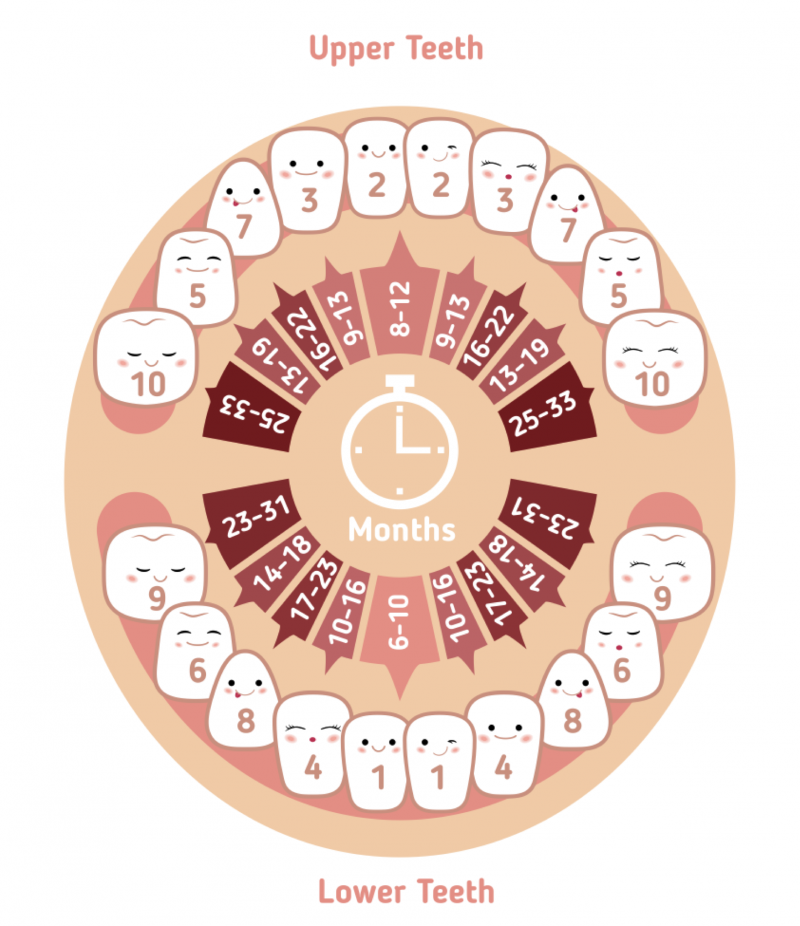
    Your baby’s first tooth is an exciting milestone! Most babies get their first tooth when they’re around 6 months old. But teething can start as early as 3 months. Teething is when your baby’s teeth come through the gums for the first time. The two front teeth on top or bottom usually come in first. Most children have all 20 of their baby teeth by time they are 3 years old.

    What are signs and symptoms that your baby is teething?

    Some babies have no trouble with teething. Other babies may feel pain for a short time. And others may be fussy for weeks because of teething pain. Signs and symptoms of teething include:

    • Being cranky.
    • Chewing on something hard.
    • Crying.
    • Drooling.
    • Fever with temperature less than 38.5C.
    • Stomach ache.
    • Swollen gums or gums that hurt when they’re touched.
    • Call your baby’s doctor if she seems sick, seems to be in constant pain, or has a temperature higher than 38.5C. These signs may mean that something else is wrong.

    How can you help your baby feel better during teething?

    To help your baby feel better:

    • Give her something to chew on, like a rubber teething ring, a cold spoon or a cold washcloth. Chewing on these things can help ease pain. Clean these items to avoid infection. Some parents find that a chilled teething ring lessens their baby’s pain. If you chill your baby’s teething ring in the freezer, take it out when it’s cold but before it becomes really hard. A frozen solid teething ring can hurt a baby’s tender gums.
    • Rub her gums with a clean finger to help with the pain. But don’t give your baby any pain medicines and don’t rub any medicines or alcohol on her gums. Some medicines can harm your baby if she swallows too much. Other medicines wash out of the mouth before they can help with pain.
    • Wash any drool off her face to avoid development of a rash.

    How to ensure good dental health for baby

    Babies can have dental health problems like tooth decay, toothache or tooth loss. Around 10% of 2-year olds have one or more cavities, and nearly 50% have some cavities by age 5. So it is important to start caring for your baby’s gums and teeth. Here’s how:

    • Feed your baby only breastmilk for at least 6 months. Don’t give your baby a bottle with sugar water, juice or soda.
    • Clean your baby’s gums after every feeding using a wet washcloth or water on a baby toothbrush with soft bristles.
    • Wash your baby’s pacifier with water only and keep it clean. Don’t clean the pacifier with your mouth. Never dip the pacifier in sugar or honey.
    • Don’t put your baby to sleep with a bottle. Let your baby finish feeding before bedtime or naptime. This can help prevent baby bottle tooth decay.
    • When your baby starts eating solid food, feed her healthy meals, limit the amount of fruit juices (water is better) and only at mealtimes only.
    • Brush your baby’s teeth twice each day, as soon as the first tooth comes in.
    • Take your baby to the dentist when she gets her first tooth, or by her first birthday and thereafter every 6 months.
    • Teach your baby to drink from a cup by his first birthday. Children should stop bottle-feeding at 12 to 14 months of age.

    Source:

    www.marchofdimes.com

  • What’s happening to my wife?

    What’s happening to my wife?

    Pregnancy lasts for 40 weeks and is separated into three trimesters:

    1. Trimester 1 covers weeks 1-13. The hormones that help the baby grow can cause mood swings, which means she may be happy one minute and sad the next. She might also feel very tired often; that’s because it’s hard work to grow a life. About 75% of women experience some type of morning sickness, which can come at any time of the day, and even sometimes all day. She might crave some foods or hate some foods she usually likes.
    2. Trimester 2 covers weeks 14-27. Women often feel much better; less nausea, fewer mood swings, and “glowing” skin will make them feel good, although it is still normal for some women to have anxiety and mood swings. Her belly will begin to show, and she will feel her baby move.
    3. Trimester 3 covers weeks 28-40. As the baby grows, your wife’s belly will get increasingly bigger, and she might start to feel uncomfortable. Baby’s movements will feel intense, and you might even see limbs pushing against the inside of your wife’s belly. She might have trouble sleeping, become dizzy, and have trouble with her balance. She will need to get as much rest as possible. She might also have Braxton Hicks contractions, her body’s way of getting ready for birth.

    Throughout your wife’s pregnancy, you play a very important role in ensuring her physical health and emotional stability, which is important for the optimal development of your baby. Pregnancy is joyful, but can also be stressful. It can deepen your relationship, but can also create new tensions due to concerns about parenting, money, and your relationship. Here are some ways you can make it a better experience for both of you:

    • Join her at prenatal care visits to provide emotional support. It will also give you the chance to ask questions and see your baby in any ultrasounds. See what prenatal health checks are required here.
    • Get educated by browsing this website or going to a free Fathers session at our Beba-ks Center. These classes are taught by men, for men. Knowing what to expect and getting your questions answered will reduce your stress and give you ideas for rewarding ways to be involved.
    • Get organized. Talk to your partner about what you both want for the baby. Decide where the baby will sleep, and make that part of your home colorful and welcoming for the baby. Go shopping for baby things.
    • Help your wife stay healthy by encouraging her to eat well, exercise, not drink or smoke or take illegal and some prescription drugs. You should also quit smoking as secondhand smoke harms your unborn baby. Help lower her stress and give her rest by offering lots of emotional support, helping out with the housework, or taking care of other children if you have them. Talking together about your hopes and plans for the baby can also help lower stress.
    • Have sex if you and your partner want. See more about sex and pregnancy here.
    • Support your partner’s decision to breastfeed. Breast milk is the best food for your baby. It has everything that your baby needs to grow and be healthy. Find out more about how you can support her here.

    What Prenatal checks are needed?

    Encourage your wife to visit the doctor as early as possible in her pregnancy as this will help to determine how many weeks pregnant she is, and to identify any possible complications. Go along with her for support and so you can ask questions. You might especially enjoy the ultrasound appointments, where you will get to see your baby on a computer screen and hear his heartbeat. In addition to the initial visit in the first trimester, the World Health Organization recommends a minimum of four prenatal visits around weeks 16, 24-28, 32, and 36 for uncomplicated pregnancies. However, in many countries, women go every month to the doctor. For more detail about prenatal health checks, click here.

    What are some danger signs?

    If your wife has any of these signs, immediately seek medical attention as they may indicate a major threat to her and/or her unborn child:

    • Severe and/or constant abdominal pain.
    • Vaginal bleeding, especially bright red blood.
    • Severe, uncontrolled vomiting that causes dehydration.
    • Headache, dizziness, or double vision or blurred vision for 2-3 hours.
    • Chills and/or high temperature (38°C or more).
    • Sudden and severe swelling of the face and the hands and feet, and/or unexplained weight gain.
    • Unusually slow or no movement of your baby after the sixth month.

    Girl or boy: who decides?

    By the 18th week of pregnancy, you should be able to tell if you are having a boy or a girl. The father’s sperm determines the sex of the child depending on if it is carrying an X or Y chromosome. The mother’s egg already contains an X chromosome; therefore, the sex of a baby is determined by the X or Y chromosome of the father’s sperm. Studies show that your likelihood of having a boy or girl is inherited, meaning if you (the father) have more brothers, you are more likely to have sons, while if you have more sisters, you are more likely to have daughters. There are lots of myths about things you can do to have a boy or girl; the position during sex (woman on top or lying on her side), the places you have sex (no sex in cupboards is not a magic boy-maker), the time you have sex (odd days or evenings), or the foods you or your wife eat (salty foods, shellfish, etc). But there is no medical proof these work.

    What do we need to have ready for the baby?

    Here are some essentials you will want to have ready before the baby comes:

    • Clothing – 6-8 all-in-ones, 6-8 vests or T-shirts, 2-4 hats, 1 heavy all-in-one suit or jacket (in winter), and 4-6 receiving blankets.
    • Diapers – plan on using about 70 diapers a week.
    • Sleeping – a crib or cot with a snug fitting mattress.
    • Feeding – if your wife is breastfeeding then nothing, but if using formula you will need bibs, bottles, teats, bottle-brushes, and a way of sterilizing (this is vital).
    • Bathing – baby bath and/or newborn bath support, soft washcloths and towels, and mild baby soap.
    • Moving – a car-seat if traveling by car. Not essential but handy are a baby carrier and stroller.

    What you need to know about C-sections

    It is not a good idea to have a C-section, unless there is a legitimate medical reason e.g. labor complications like breech baby, or prior C-section. This is because C-sections can cause problems for your baby and your wife, especially in future pregnancies. Each C-section your wife has increases her risk for some serious complications in future pregnancies, which is why experts recommend a vaginal delivery if you intend to have several children. Be wary of doctors who push for C-sections without giving legitimate medical reasons, since C-sections often cost more for patients than vaginal births, and can be more convenient for doctors as they can be scheduled during ‘office hours’.

    Some people think C-sections will be easier, less painful and less complicated, so it’s important to separate the myths from the realities.

    Myth #1: Greater convenience. Yes, it can help you better plan for family help and work leave, but did you or she know your wife will:

    • Not be able to schedule a C-section before 39 weeks so you must be ready if baby decides to come before that.
    • Have added difficulty of recovering from major surgery while caring for a newborn and any other children.
    • Be in the hospital for longer (an average of three days instead of one or two).
    • Have to limit physical activity for several weeks.
    • Have pain from your incision that can make it uncomfortable to breastfeed.
    • Are significantly more likely to return to the hospital with complications.

    Myth #2: Avoid pain of labor and delivery. Yes, your wife might not feel much pain during the surgery, but did you or she know your wife will:

    • Likely have a longer, tougher recovery than most women with vaginal deliveries.
    • Have pain in the weeks after delivery and will need medication.
    • Have difficulty in picking up, caring for, or feeding your newborn and other older children who might need extra attention given their new sibling.
    • Likely still feel pain or discomfort during the process and after when the drugs wear off or give side-effects.

    Myth #3: Minimize complications. Yes, she can avoid complications that happen in a small percentage of vaginal deliveries, but did you or she know that there are:

    • Physical risks for the mother, both immediate and long-term. Since it is major surgery there are risks of complications such as infection, bleeding, and injury to other organs. Once she has a C-section, she is more likely in future pregnancies to have a C-section, and this causes problems in future pregnancies such as placenta previa. The vast majority of tears that occur in vaginal births either cause little discomfort or may require stitches but usually heal well in a short time.
    • Psychological risks for the mother, including negative feelings about the birth, and less early contact with her baby, which can harm bonding and breastfeeding and increase her risk for postpartum depression.
    • Risks for the baby as Babies born by C-section may have more breathing and other medical problems.

    Myth #4: Preserve ‘tightness’. Research has proven that long-term sexual function remains the same and is not impacted by vaginal birth. Vaginal tightness returns within six months postpartum after at least the first birth. Your wife can do kegel exercises to tighten her vagina after a vaginal birth.

    Let’s talk about sex

    • Most women can continue to have sex up until they go into labor. Sexual activity will not hurt the baby. The baby is kept safe by the amniotic sac, cervix, and uterine muscle. There is also a thick mucus plug that seals the cervix and protects the baby from infection.
    • It is normal for sexual desire in women to decrease in the first trimester due to breast tenderness, fatigue, nausea. Other women find the freedom of not having to worry about birth control or conceiving makes sex more enjoyable. By the second trimester, many women feel less nausea and experience heightened sexual desire.
    • Fathers can support and/or raise their partner’s self-esteem about their changing body by offering positive comments.
    • As the body changes during pregnancy, couples may need to try different sexual positions to find what is comfortable for her. Some women discover new or increased sexual pleasures during pregnancy because of such experimentation. ‘Spooning’ while sitting up offers plenty of room for manual stimulation, side-lying allows for comfortable oral stimulation, and experimenting with pillows and support devices can help enhance and support a variety of positions and activities.
    • Due to a sense of fullness, some women find vaginal penetration uncomfortable at some points during pregnancy and opt for manual, oral, or self-pleasuring sex instead.
    • Some cramping after making love is normal throughout pregnancy. The uterus contracts during orgasm and these contractions might be more noticeable during pregnancy as the uterus gets bigger.
    • If the partner is at risk of experiencing pregnancy complications (vaginal bleeding, leakage of amniotic fluid, etc) the health provider will advise you to stop having sex. Be open with your health provider and ask what sexual activity can be done instead.

    Excerpted from Chapter 6: Relationships, Sex, and Emotional Support in Our Bodies, Ourselves: Pregnancy and Birth © 2008 Boston Women’s Health Book Collective

    Common fears of expecting fathers

    1. Security – men are conditioned to protect their families, both physically and financially, and it is normal for fathers to feel even more pressure during this time.
    2. Ability – many men worry they will ‘break’ their baby and that they don’t know how to care for an infant. Don’t worry; learn the right moves here, and then practice.
    3. Mortality – being more aware of their own mortality and more afraid for the life of their wife and unborn baby is very normal.
    4. Relationship – men sometimes fear they will be ‘replaced’ by the baby, but that often disappears when you meet your baby. They also worry about their sex life before and after the baby; we talk about that more on this page.
    5. Vagina – just the word can make men shut down. Men are generally not comfortable thinking or talking about the stuff involved with women’s bodies during and after pregnancy.

    Why Fatherhood involvement matters

    A review of 16 longitudinal studies that looked at the impact of father’s presence during childhood found that those children who had an involved father early on have, on average, fewer behavior problems, less criminal activity, better economic stability, better cognitive development, better performance in school, and less stress during adulthood (Sarkadi, Kristiansson, Oberklaid, and Bremberg, 2008).

    • Infants with involved fathers have better cognitive functions.
    • Infants with involved fathers more frequently develop into children with high self-esteem who can resolve conflicts without violence.
    • Children with involved fathers generally have fewer behavior problems.
    • Fathers involved in their children’s lives are more satisfied and more likely to stay involved.
    • Involved fathers have better health: they take fewer drugs, consume less alcohol, live longer, and feel mentally and physically healthier.
    • Some studies show that fathers involved in caregiving have more satisfying relationships with their partners, feel more connected to their families, and report better sex lives with their partner.
    • Involved fathers contribute to reducing maternal stress during pregnancy.
    • Mothers who are accompanied during prenatal visits usually attend more of them, compared to mothers who are not accompanied.

    Source: Promundo, CulturaSalud, and REDMAS (2013). Program P – A Manual for Engaging Men in Fatherhood, Caregiving, Maternal and Child Health. Promundo: Rio de Janeiro, Brazil, and Washington, D.C. USA.

  • Immunization Schedule

    Immunization Schedule

    In the first year of life, your baby gets several immunizations, or vaccines, to protect her from life-threatening illnesses. Following is the immunization schedule in Kosovo.

    Vaccine

    Birth

    mths

    mths

    mths

    12 mths

    6-7 yrs

    11-12 yrs

    17-18 yrs

    BCG

    Prevents tuberculosis

    1st


    HepB

    Prevents Hepatitis B

    1st

    2nd

    3rd

    4th


    DPT

    Prevents diphtheria, pertussis and tetanus


    1st

    2nd

    3rd


    Hib

    Prevents haemophilus influenza type b


    1st

    2nd

    3rd


    IPV

    Prevents polio, administered by injection


    1st

    2nd

    3rd


    DPTr

    Prevents diphtheria, pertussis, tetanus  (booster/repeat)


    1st


    OPVr

    Prevents polio, administered by mouth (booster/repeat)


    1st

    2nd

    3rd


    MMRv

    Prevents measles, mumps, rubella and varicella


    1st


    MMRr

    Prevents measles, mumps, rubella (booster/repeat)


    1st


    DT

    Prevents diphtheria and tetanus


    1st


    Td

    Prevents diphtheria and tetanus (booster/repeat)


    1st

    2nd

    Source: Ministry of Health and National Institute of Public Health of Kosovo

    Most babies don’t have side effects from vaccines. If they do, they usually aren’t serious. Some vaccines may cause a low fever, a rash, or soreness at the spot where the shot was given. Although your baby may seem like he’s getting sick after a vaccination, these reactions are good signs that his immune system is working and learning to fight off infections. In rare cases, a baby may have a serious allergic reaction to a vaccine. If you think your baby might have a reaction, call your baby’s doctor immediately. Vaccinations do not cause autism, and this has been proven by many scientific studies. If you have any questions about the risks of vaccinations, talk to your baby’s doctor.

    Baby Check-up Schedule

    Even when things are going well, regular checkups during can keep your baby happy and healthy. During well-baby visits, you find out about your baby’s growth, weight gain, health, and vaccinations, as well as whether your baby is meeting normal development goals. The typical schedule for visits in Kosovo during your child’s first two years is:

    Visit #1

    3-5 days

    Visit #2

    1 month

    Visit #3

    2 months

    Visit #4

    4 months

    Visit #5

    6 months

    Visit #6

    9 months

    Visit #7

    12 months

    Visit #8

    15 months

    Visit #9

    18 months

    Visit #10

    24 months

    Common parts of any well-baby checkup are:

    1. Charting growth: the doctor will measure baby’s weight, length, and head measurements and plot them on a chart (see below). You can use this to see how your baby’s growth compares to others at the same age.
    2. Physical examination: a thorough physical exam, from head to toe, is done. The doctor will look for signs that your baby is healthy and meeting normal physical development goals.
    3. General development: the doctor will check to make sure your baby is meeting the goals for motor skills and emotional development.
    4. Nutrition: the doctor will give you advice about breastfeeding, vitamins, and other nutritional issues. As your baby grows, you’ll be asked questions about the foods your baby eats.
    5. General discussion: The provider will also want to tell you what to expect in your baby’s growth during the coming months. Be sure to ask any questions you have during the visit, no matter how small. Don’t be afraid to talk about it if you are feeling run-down, stressed, or depressed.
    6. Lab tests: these are not usually needed at these visits, but your baby may be tested for anemia (low blood iron) with a simple finger-prick test.
    7. Vaccinations: At different ages, your baby will need different types of vaccinations during these visits.

    Courtesy of March of Dimes

    Growth charts for girls and boys

    Following are the World Health Organization’s growth charts under two years of age:

    • Weight for age: Boys
      Image
    • Length for age: Boys
      Image
    • Head circumference for age: Boys
      Image
    • Weight for age: Girls
      Image
    • Length for age: Girls
      Image
    • Head circumference for age: Girls
      Image