Category: Baby & Mother

  • Crying and Calming

    Crying and Calming

    During the first few months, babies cry about 1.5 hours per day for a whole range of reasons: hunger, pain, fear, tiredness, or they just want to be held. Persistent crying can cause huge amounts of stress and exhaustion so it’s important to find a way to calm your baby. Understanding your baby’s cues will help you to understand how to respond and in many cases prevent the crying from happening in the first place.

    If your baby cries, try the following:

    • Check to make sure he isn’t hungry.
    • Check to make sure he has a clean diaper. If not, change it.
    • Look for signs of illness or pain. Check if he has a fever over 38C, swollen gums or an ear infection.
    • Rock the baby or walk with him.
    • Sing or talk to the baby.
    • Offer him a pacifier or a toy.
    • Take him for a ride in a stroller.
    • Take him for a ride in the car. Be sure baby is secured in the car seat.
    • Swaddle the baby by wrapping her snugly in a receiving blanket.
    • Play music or turn on TV. Be sure the sound soothing.
    • Run the vacuum cleaner, put on the clothes dryer or run water in the bathtub or sink. Some babies like these rhythmic noises.
    • Hold the baby close to your body. Breathe calmly and slowly.
    • If nothing else works, put the baby in his crib on his back, close the door and check on him in 10 minutes.

    There is also a technique that many parents have used worldwide to calm their baby and put him to sleep in minutes. This approach turns on baby’s calming reflex by doing five simple steps that imitate their mother’s womb: the 5 S’s: 1) swaddle, 2) side, 3) shush, 4) swing, 5) suck. Watch this video to learn the technique in just a few minutes. You can also learn more about the technique at the Happiest Baby website.

    It is important that you respond to your baby quickly to reassure them that they are not alone. Don’t worry, you can’t spoil him with too much holding. Studies have found that babies who were held and carried often cried much less. They also end up being much more independent toddlers, according to research by Johns Hopkins University, one of the world’s leading public health institutions.

    If your baby cries longer than usual and nothing you do soothes him, call your baby’s doctor to see if there is a medical reason or if he’s sick. He may also have colic, which is intense crying for more than 3 hours a day. This occurs in about 1 in 10 babies. It starts at around 2-3 weeks of age, peaks at around 6 weeks and continues until baby is 3-4 months old. It occurs at the same time every day, usually in the late afternoon to early evening. Around 20% of babies are thought to be colicky. There are many theories for why some babies are colicky, but it is very possible that the baby is sensitive to being over-tired or over-stimulated, and not because of gas problems. If your baby seems to have colic, practice the “Five S’s” explained in the video above.

    Never shake your baby. If you begin to feel very frustrated, put the baby down somewhere safe and step away. You can also call a friend or relative for help. It takes only a few seconds of shaking to cause lasting brain damage in a baby, which results in shaken baby syndrome (SBS). SBS is the leading cause of death in child abuse cases in the United States. The average age of the victims is 3-8 months. In most cases, the person who hurts the baby is a young male in his early twenties, often the baby’s father or the mother’s boyfriend. About half the babies who have SBS die.

  • Immunization Schedule

    Immunization Schedule

    Immunization Schedule

    In the first year of life, your baby gets several immunizations, or vaccines, to protect her from life-threatening illnesses. Following is the immunization schedule in Kosovo.

    Vaccine

    Birth

    mths

    mths

    mths

    12 mths

    6-7 yrs

    11-12 yrs

    17-18 yrs

    BCG

    Prevents tuberculosis

    1st


    HepB

    Prevents Hepatitis B

    1st

    2nd

    3rd

    4th


    DPT

    Prevents diphtheria, pertussis and tetanus


    1st

    2nd

    3rd


    Hib

    Prevents haemophilus influenza type b


    1st

    2nd

    3rd


    IPV

    Prevents polio, administered by injection


    1st

    2nd

    3rd


    DPTr

    Prevents diphtheria, pertussis, tetanus  (booster/repeat)


    1st


    OPVr

    Prevents polio, administered by mouth (booster/repeat)


    1st

    2nd

    3rd


    MMRv

    Prevents measles, mumps, rubella and varicella


    1st


    MMRr

    Prevents measles, mumps, rubella (booster/repeat)


    1st


    DT

    Prevents diphtheria and tetanus


    1st


    Td

    Prevents diphtheria and tetanus (booster/repeat)


    1st

    2nd

    Most babies don’t have side effects from vaccines. If they do, they usually aren’t serious. Some vaccines may cause low fever, a rash or soreness at the spot where the shot was given. Although your baby may seem like he’s getting sick after a vaccination, these reactions are good signs that his immune system is working and learning to fight off infections. In rare cases, a baby may have a serious allergic reaction to a vaccine. If you think your baby might have a reaction, call your baby’s doctor immediately. Vaccinations do not cause autism, and this has been proven be many scientific studies. If you have any questions about the risks of vaccinations, talk to your baby’s doctor.

    Baby Check-up Schedule

    Even when things are going well, regular checkups during can keep your baby happy and healthy. During well-baby visits, you find out about your baby’s growth, weight gain, health and vaccinations, as well as whether your baby is meeting normal development goals. The typical schedule for visits in Kosovo during your child’s first two years is:

    Visit #1

    3-5 days

    Visit #2

    1 month

    Visit #3

    2 months

    Visit #4

    4 months

    Visit #5

    6 months

    Visit #6

    9 months

    Visit #7

    12 months

    Visit #8

    15 months

    Visit #9

    18 months

    Visit #10

    24 months

    Immunization Schedule

    In the first year of life, your baby gets several immunizations, or vaccines, to protect her from life-threatening illnesses. Following is the immunization schedule in Kosovo.

    VaccineBirthmthsmthsmths12 mths6-7 yrs11-12 yrs17-18 yrs
    BCGPrevents tuberculosis1st       
    HepBPrevents Hepatitis B1st2nd3rd4th    
    DPTPrevents diphtheria, pertussis and tetanus 1st2nd3rd    
    HibPrevents haemophilus influenza type b 1st2nd3rd    
    IPVPrevents polio, administered by injection 1st2nd3rd    
    DPTrPrevents diphtheria, pertussis, tetanus  (booster/repeat)    1st   
    OPVrPrevents polio, administered by mouth (booster/repeat)    1st2nd3rd 
    MMRvPrevents measles, mumps, rubella and varicella    1st   
    MMRrPrevents measles, mumps, rubella (booster/repeat)     1st  
    DTPrevents diphtheria and tetanus     1st  
    TdPrevents diphtheria and tetanus (booster/repeat)      1st2nd
    Source: Ministry of Health and National Institute of Public Health of Kosovo

    Most babies don’t have side effects from vaccines. If they do, they usually aren’t serious. Some vaccines may cause low fever, a rash or soreness at the spot where the shot was given. Although your baby may seem like he’s getting sick after a vaccination, these reactions are good signs that his immune system is working and learning to fight off infections. In rare cases, a baby may have a serious allergic reaction to a vaccine. If you think your baby might have a reaction, call your baby’s doctor immediately. Vaccinations do not cause autism, and this has been proven be many scientific studies. If you have any questions about the risks of vaccinations, talk to your baby’s doctor.

    Baby Check-up Schedule

    Even when things are going well, regular checkups during can keep your baby happy and healthy. During well-baby visits, you find out about your baby’s growth, weight gain, health and vaccinations, as well as whether your baby is meeting normal development goals. The typical schedule for visits in Kosovo during your child’s first two years is:

    Visit #13-5 daysVisit #21 monthVisit #32 monthsVisit #44 monthsVisit #56 months
    Visit #69 monthsVisit #712 monthsVisit #815 monthsVisit #918 monthsVisit #1024 months

    Common parts of any well-baby checkup are:

    • Charting growth: the doctor will measure baby’s weight, length, and head measurements and plot them on a chart (see below). You can use this to see how your baby’s growth compares to others at the same age.
    • Physical examination: a thorough physical exam, from head to toe, is done. The doctor will look for signs that your baby is healthy and meeting normal physical development goals.
    • General development: the doctor will check to make sure your baby is meeting the goals for motor skills and emotional development.
    • Nutrition: the doctor will give you advice about breastfeeding, vitamins and other nutritional issues. As your baby grows, you’ll be asked questions about foods your baby eats.
    • General discussion: The provider will also want to tell you what to expect in your baby’s growth during the coming months. Be sure to ask any questions you have during the visit, no matter how small. Don’t be afraid to talk about it if you are feeling run-down, stressed, or depressed.
    • Lab tests: these are not usually needed at these visits, but your baby may be tested for anemia (low blood iron) with a simple finger-prick test.
    • Vaccinations: At different ages, your baby will need different types of vaccinations during these visits.
    Courtesy of March of Dimes

    Growth charts for girls and boys

    Following are the World Health Organization’s growth charts under two years of age:

  • Welcome to the journey of parenthood

    Welcome to the journey of parenthood

    Learn all the basics about taking care of your baby, and mother, here.

  • Të ushqyerit e drejtë të fëmijëve 0 deri në 5 vjeç

    Të ushqyerit e drejtë të fëmijëve 0 deri në 5 vjeç

    Të ushqyerit e drejtë dhe obeziteti i fëmijëve 0 deri në 5 vjeç

    Ushqyerja e fëmijëve pasqyron gjendjen e tyre të përgjithshme shëndetësore.

    Çdo fëmijë duhet të ushqehet ekskluzivisht me gji për të paktën 6 muajt e parë të jetës. Jepi të drejtë fëmijës tuaj të rritet i shëndetshëm!

    Pse duhet foshnja të ushqehet ekskluzivisht me gji 6 muajt e parë të jetës?

    • Sistemi i  tretjes te foshnja është ende i

    “papjekur”,

    • Gjendja fizike në këtë moshë  nuk mund të

    pranoj ushqimin e ri dhe,

    • Mundësia e alergjive ndaj ushqimit është në rritje e sipër.

    Përparësitë e gjidhënies

    • Gjidhënia parandalon obezitetin përmes shtimit normal të peshës trupore,

    • Qumështi i gjirit tretet lehtë duke mundësuar jashtëqitje të rregullt,

    • Qumështi i gjirit ndikon në zhvillimin e trurit dhe në nivel më të lartë të inteligjencës,

    • Qumështi i  gjirit ndihmon  rritjen e imunitetit të foshnjës për parandalim apo mbrojtje nga sëmundjet kronike dhe alergjitë,

    • Gjidhënia plotëson nevojat emocionale të foshnjës, krijon lidhjen mes nënës dhe foshnjës, foshnja qanë më pak dhe përparon më shumë.

    • Qumështi i gjirit është ushqim ideal për foshnje, i përshtatshëm tërësisht për nevojat e fëmijës

    Rregullat për ushqim ekskluzivisht në gji:

    • I posalinduri i shëndoshë duhet menjëhërë të ketë kontakt “lëkurë me lëkurë” me nënën e tij,

    • Gjashtë muajt e parë të jetës fëmija ushqehet vetëm me gji pa asnjë ushqim ose lëng shtesë,

    • Gjatë kësaj kohe duhet respektuar rregullin: kërkesë -ofrim: sa më shpesh ushqehet foshnja aq më shumë prodhohet qumështi,

    • Gjatë gjidhënies të shmanget ushqyerja  me biberon,

    • Për qetësim të foshnjës mos të përdoren

    “mashtrueset”(memet),

    • Gjatë periudhës së gjidhënies nëna t’i shmanget çdo aktiviteti që e “largon” nga foshnja e saj.

    Si të arrijmë gjidhënie të suksesshme?

    Duke respektuar:

    • Mënyrën si nëna mban foshnjën

    • Mënyrën si foshnja mban gojën në gji

    Përdorimi i vitaminave shtesë, fluorit dhe hekurit në 6 muajte parë të jetës

    Vitamina K e cila parandalon gjakderdhjen, i injektohet të posalindurit menjëherë pas lindjes.

    Të gjitha foshnjeve ju preferohet suplementimi me vitamin D me 400 IU në ditë duke filluar brenda ditëve të para të jetës deri sa fëmija të mbush një vit.

    Fëmijët e ushqyer me gji, të lindur me kohë, nuk kanë nevojë për shtesa të hekurit sepse rezervat mjaftojnë deri në moshën një vjeç. Qumështi i gjirit ka shumë më pak hekur në krahasim me qumështin e adaptuar por shfrytëzimi i tij është më i madh.

    Suplementimi me fluor nuk preferohet në 6 muajt e parë të jetës, ndërsa në vazhdim veprohet sipas indikacioneve apo vendit ku jetojnë.

    Ushqimi i fëmijëve që nuk janë në gji

    Nënat të cilat edhe pas informimit, për çështje të ndryshme, kanë vendosë të ushqejnë foshnjën e tyre me formulë, ju duhet ofruar mbështetje individuale dhe informata të sakta për përdorim të drejtë. Kjo vlen edhe për nënat që se kanë të mundur gjidhënien apo kanë ndonjë kundërindikacion për këtë.

    Ato duhet informuar se:

    • Formulat e thata (qumështi pluhur i adaptuar) nuk është prodhim steril. Mund të kontaminohet gjatë përdorimit.

    • Tek formulat e thata rreptësisht duhet respektuar udhëzimet e përgatitjes që janë në paketim

    • Qumështi jo i holluar i lopës (apo sisorëve tjerë), qumështi i kondenzuar, përpunuar (pa yndyrë) dhe gjysmë përpunuar (pjesërisht me yndyrë) nuk guxon t’i ipet fëmijëve nën 2 vjeç

      Për përgatitjen, ruajtjen dhe ushqyerjen  me formula të thata si dhe përdorimin e drejtë të formulave të gatshme në formë tretjeje, rekomandohet si në vijim:

    • Kujdes kontaminimi!

    • Çdo shujtë të përgatitet e freskët!

    • Të bëhet përgatitja me ujë të vluar ( >70°C)

    • Uji i vluar duhet ftohur shpejtë (jo më shumë se

    30 minuta) dhe të përdoret menjëherë; kujdes që me temperaturë të lartë mos të shkaktoni djegje në gojën e fëmijës!

    • Pas çdo shujte të hudhet sasia e mbetur!

    Në situata të jashtëzakonshme dhe rrethana të ndryshme kur nëna është e detyruar ta ushqej fëmijën me qumësht lope përgatitja bëhet në këtë mënyrë:

    • Në muajin e parë të jetës duhet përzier 40 ml qumësht me 20 ml ujë të vluar,

    • Në muajin e dytë të jetës duhet perzier 60 ml qumësht me 30 ml ujë të vluar,

    • Në muajin e tretë dhe katërt të jetës duhet përzier 80 ml qumësht me 40 ml ujë të vluar,

    • Në muajin e pestë dhe të gjashtë të jetës duhet përzier 100 ml qumësht me 50 ml ujë të vluar.

    Kur të fillohet me ushqim shtesë?

    Ushqimi shtesë është plotësim i ushqimit me qumësht dhe nuk nënkupton ndërprerjen e gjidhënies apo zëvëndësimin e qumështit me ushqim tjetër. Në vitin e parë të jetës foshnja rritet më shpejtë. Në moshën 4-6 muaj foshnja dyfishon peshën e lindjes ndërsa në moshën një vjeç e trefishon. Kjo tregon se sa ka rëndësi ushqimi i drejtë dhe kualitativ në këtë periudhë. Në moshën 6 muajshe foshnja është e gatshme për ushqim me lugë dhe organizmi ështëi përgatitur dhe i pjekur për ushqim të ri. Disa fëmijëve u duhet kohë më e gjatë që të përshtaten, derisa të tjerët me shumë kënaqësi pranojnë ushqimin e ri. Prindërit duhet të kenë shumë durim, të jenë të qetë,të kenë mirëkuptim sepse kjo është përvojë e re për ta dhe për fëmijën e tyre. Foshnja në fillim mund të refuzoj ushqimin por nuk duhet “heq dorë”. Foshnja është adaptuar në thithje dhe nuk mundet menjëherë të përtypet dhe të përbijë ushqimin i cili shpeshherë i del edhe nga goja. Foshnja mund të luaj me lugën por kjo është mënyra e të mësuarit dhe e njohjes me metodën e re dhe ushqimin e ri.

    Të ngrënit me lugë është hapi i  parë për pavarësi në ushqyerje

    Masat mbrojtëse dhe respektimi i rregullave të caktuara            

    Mos harro!

    • Larjen e duarve para dhe gjatë përgatitjes së ushqimit.

    • Enët duhet me qenë nga qelqi, nuk duhet sterilizuar por vetëm duhet pastruar në temperatura të larta dhe duhet tharë mirë.

    • Produktet të jenë të freskëta, të kontrolluara dhe kualitative. Pemët dhe perimet duhet të jenë të pjekura, të freskëta, të “shëndosha”, sezonale, mundësisht të pa spërkatura, pa pesticide dhe të rritura në mënyrë natyrale.

    • Produktet e reja të shtohen  një nga një, në fillim në formë qulli të miksuara dhe jo shumë të dendura, në sasi të vogël (2-3 lugë për shujtë), e pastaj duke rritur sasinë në 125 ml, e më pas në 250 ml. Produktet e ndryshme të përdoren në distancë prej 5-7 ditësh që të shihet a po i përballon fëmija mirë.

    • Asnjëherë mos të shtohen dy apo më tepër produkte së bashku për shkak të vlerësimit të intolerancës ndaj tyre (alergjia, ndryshimet në lëkurë, barkqitjet dhe vjelljet)

    • Fëmijës nuk duhet dhënë sasi e tepërt e ushqimit në gojë sepse ai duhet mësuar përtypjen.

    • Mos përdorni ushqim të ngrirë për fëmijën! Ushqimi i përgatitur në shtëpi mund të përdoret brenda 24-48 orë (nëse ruhet në kushte optimale).

    • Ushqimi industrial (nëse është nxehur) fëmija duhet ngrënë menjëherë, në të kundërtën atë duhet hedhur.

    • Qullet përgatiten pa shtim të kripës, sheqerit dhe mëlmesave tjera.

    • Mos ushqeni fëmijën në pozitë të shtrirë!

    • Mos ndërpreni gjidhënien apo qumështin formulë!

    • Nëse fëmija manifeston ndryshime alergjike, konsultoni mjekun!

    Me cilin ushqim të fillohet?

    Fillohet me ushqim me mundësi të vogël për alergji si: lëngje pemësh, qulle nga pemët, perimet dhe drithërat.

    Ky ushqim për nga shija është i ngjajshëm me shijen e ëmbël të qumështit dhe foshnja shumë lehtë do të “pranojë” shujtat e tilla.

    Në muajin e 7-të shtohet mishi, së pari mishi i bardhë (i pulës apo quranit), pastaj mishi i viqit të ri (i bluar e më pas i copëtuar) si dhe supat ose qullet e  perimeve. Pas muajit të 8-të shtohet peshku i bardhë pa hala, i zier apo i përgatitur në avull. E kuqja  e vezës e zier mirë duke shtuar sasinë gradualisht. Vaji i ullirit dhe lulediellit.

    Pas muajit të 10-të mishi i mështjerrës.

    Pas muajit të 11, kriposja e lehtë e ushqimit.

    Pas moshës një vjeç mishi i lopës  dhe e bardha e vezës.

    Për shkak të mundësisë së reaksioneve alergjike në vitin e parë të jetës nuk duhet dhënë pemët si: dredhëza, mjedra, manaferra, pemët citrone (kivi, portokalli, limoni, mandarina), pemët farore (arrat, bademi, kikirikat, lajthitë), çokollada, eurokremi, mjalti, maja buke, e bardha e vezës dhe ushqimi me konzervans.

    Llojet e produkteve

    Fruta

    Frutat janë burim i pasur i vitaminave, kripërave, mineraleve dhe karbohidrateve. Zakonisht fillohet me mollën, dardhën, kumbullën, pjeshkën dhe kajsinë. Në muajin e 8-të ipen të grryera imët, ndërsa në muajin e 11-të ipen në formë të freskët si tërësi.

    Perimet

    Perimet sjellin kualitet të ri në ushqim si dhe adaptim të fëmijës në “laramani” të ushqimit. Edhe pse vlerat energjike të perimeve janë të vogla ato prap janë të dobishme, sepse krahas proteinave bimore, përmbajnë edhe minerale, vitamina dhe materie të balansuara. Zakonisht fillohet me perime që treten lehtë: karrota, patatja, kungullesha, karfioli. Perimet e përgatitura nuk nxehen rishtazi (nga rreziku i nitriteve) si dhe nuk konsumohen 2 ditë radhazi.

    Drithërat dhe prodhimet e tyre

    Qullet me drithëra mund të jenë shujta kalimtare. Drithërat dhe prodhimet e tyre përmbajnë karbohidrate komplekse të cilat sigurojnë së paku 50% të energjisë së përgjithshme.

    Pas muajit të 7-të mund të ipen disa prodhime të drithërave që përmbajnë gluten (grizi, keksi).

    Mishi

    Mishi është burim i aminoacideve esenciale, vitaminave dhe mineraleve. Hekuri shfrytëzohet shumë mirë nga mishi. Mishi shtohet në ushqimin e foshnjës pas muajit të 7-të. Fillohet me mish të bardhë (pule apo qurani) sepse tretet lehtë, ka mundësi relative të vogla për alergji, është e arritshme dhe pak e kushtushme. Gjatë përgatitjes pastrohet nga lëkura dhe pjesët yndyrore. Nuk preferohet mishi i thatë, pashtetat dhe salsiqe. Peshku është burim i vlefshëm i proteinave, kalciumit, omega 3- acideve yndyrore, dhe duhet përdorë së paku një herë në javë në menynë ushqimore. Pas muajit të 8-të  mund të përdoret peshku i bardhë pa hala i zier apo i përgatitur në avull.

    Qumështi dhe prodhimet e tij

    OBSH nuk preferon qumështin e lopës para moshës një vjeç. Fëmijët ushqehen me gji apo qumësht formulë konform moshës. Qumështi është burim i pasur i  kalciumit, prandaj përdoret rregullisht që të krijohen rezervat për tërë jetën (i nevojshëm për dhëmbë dhe eshtra).

    Edhe produktet tjera përmbajnë kalcium por shfrytëzimi më i mirë është nga qumështi dhe prodhimet e ti

    Vezët

    Pas muajit të 8-të ipet e kuqja e vezës e zier mirë në sasi të vogël duke e shtuar gradualisht.

    E bardha e vezës ipet pas moshës një vjeç. Vezët e tundura apo gjysëm të ziera nuk preferohen për shkak të alergjisë dhe infeksioneve të mundshme me salmonelën.

    Mëlmesat

    Kriposja e lehtë e ushqimit lejohet në muajin e 11-të, por nuk përdoren biberi, speci i kuq, senfi, uthulla. Majdanozi dhe selino mund të ipen në formë çaji ose në supë. Farat e kimit (Qimnon) ipen në muajt e parë të jetës në çaj (i dobishëm për tretje dhe largim të gazrave).

    Vajrat

    Vaji lulediellit, ullirit dhe misrit shtohet në ushqim në muajin e 8-të, mundet edhe buteri ndërsa margarina nuk preferohet.

    Uji

    Sipas dëshirës

    Çaji

    Kohëpaskohe si pije, e freskët, e zier nga kaça, kopri dhe kamomila.

    Mjalti

    Mjalti mund të përmbajë spore të Clostridium botulinum që shkakton botulizmin. Trakti i  tretjes nuk ka aciditet të mjaftueshëm që do shkatërronte sporet, prandaj mjaltin nuk duhet dhënë foshnjës deri sa të mbush një vit.

    Kur fëmija adaptohet në shije të ushqimit  atëherë mund të bëhen kombinime të ndryshme të qulleve dhe konsistenca e ushqimit të përshtatet sipas mundësisë së përtypjes dhe daljes së dhëmbëve të fëmijës.

    Ushqimi dhe alergjitë

    Alergjitë në ushqim te fëmijët janë të shpeshta. Deri në moshën 3 vjeç 6-8% të fëmijëve diagnostikohen me alergji në ushqim.

    Sistemi digjestiv i foshnjeve dhe fëmijëve të vegjël nuk ka pjekuri të mjaftueshme dhe me marrjen e produkteve të reja shumë vështirë dallon të “huajën” nga e “vetja . Sistemi imun i zorrëve mund të bëjë “gabime” duke inicuar sistemin mbrojtës ndaj ushqimit dhe duke shkaktuar alergji.

    Me rritjen e fëmijës dhe me marrjen e vazhdueshme të ushqimit, sistemi imun gradualisht “pjeket” dhe alergjia në ushqim bëhet më e rrallë. Për këtë arsye në vitin e parë të jetës ushqimi ipet me kujdes të veçantë.

    Që nga lindja e deri në muajin e katërt dhe pestë ushqimi i vetëm i nevojshëm është qumështi i nënës apo qumështi formulë (nëse nëna nuk ka mundësi ta ushqejë fëmijën e saj me gji). Shtimi i hershëm i ushqimit, para muajit të katërt të jetës, rrit mundësinë për shfaqjen e alergjisë. Kujdes të veçantë duhet të ketë renditja e përdorimit të produkteve të reja.

    Ushqimin të cilin fëmija e provon  për herë të parë duhet të ipet në orët e mëngjesit që të përcillet reaksioni i fëmijës gjatë ditës. Poashtu ushqimi i ri duhet të ipet çdo ditë, minimum 3 ditë radhazi.

    Alergjenet më të shpeshta janë dredhëzat, e kuqja dhe e bardha e vezës, mjalti, arrat, bademat, lajthitë, kikiriki, qumështi, frutat e detit. Për këtë arsye këto produkte shtohen në ushqim ngadalë, në moshë të caktuar për produkte përkatëse. 

    Ndonjëherë paraqiten probleme respiratore si pengesa në frymëmarrje, rrjedhje hundësh, kollë, teshtitje, e në raste të rënda ngulfatje dhe shok anafilaktik. Ndryshimet në lëkurë paraqiten në minutat e parë deri në gjysëm ore pas marrjes së ushqimit.

    Alergjia në ushqim paraqitet në forma të ndryshme, ndryshime në lëkurë si urtika (pllaka të kuqe) apo ekzemë. Alergjitë në disa lloje të ushqimit manifestohen me pengesa në traktin e tretjes si mundim, vjellje, barkqitje, gjakë në feqe si dhe fëmija nuk përparon. Nëse lajmërohet alergjia në ushqim, prindërit duhet fotografuar ndryshimet, të shënojnë se çfarë lloj ushqimi ka ngrënë fëmija atë ditë dhe deri në vizitë te mjeku të evitojnë atë lloj të ushqimit. Shumë alergji të cilat shfaqen në vitin e parë të jetës me kalimin e kohës zhduken apo dobësohen prandaj largimi i ushqimit nga menyja ushqimore nuk bëhet pa konsultimin  e mjekut.Terapia nënkupton evitimin e ushqimit që shkakton alergji e sipas nevojës edhe përdorimin e medikamenteve.

    Që nga lindja deri në 5 vjeç, punëtorët shëndetësorë kanë obligim matjen e vazhdueshme të      peshës dhe gjatësisë trupore si dhe interpretimin e tyre përmes tabelave dhe diagrameve ku përcillet zhvillimi i fëmijës

    Zhvillimi i këtij materiali u mundësua nga:

    Canada Fund for Local Initiatives

  • Teething

    Teething

    Teething

    Courtesy of March of Dimes, http://www.marchofdimes.org/baby/teething.aspx

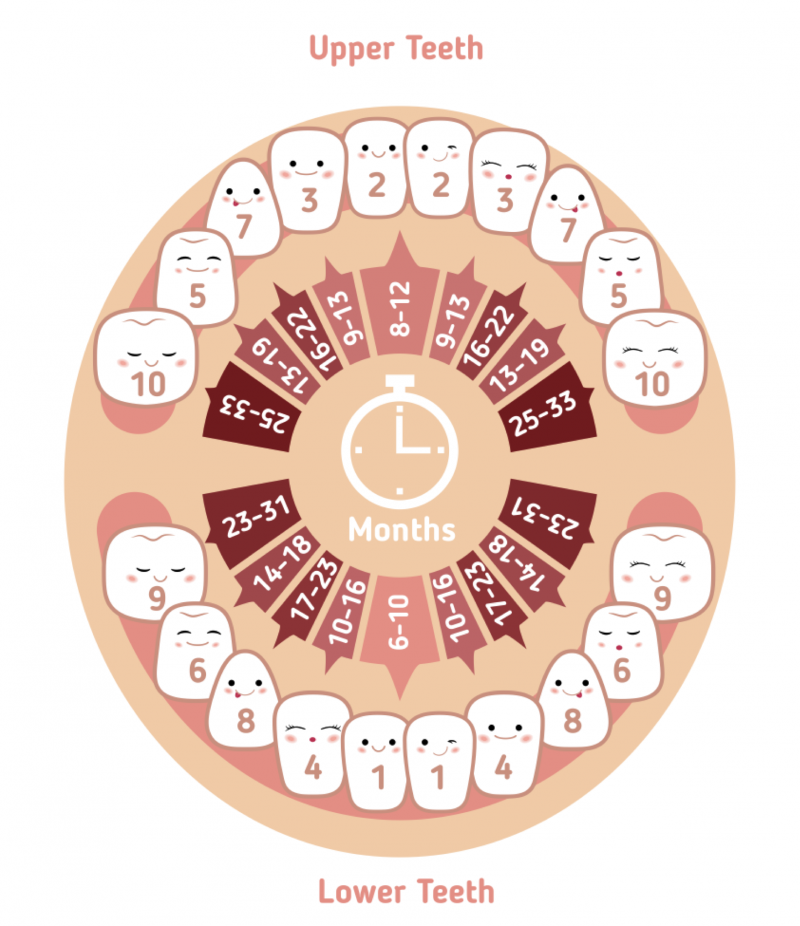
    Your baby’s first tooth is an exciting milestone! Most babies get their first tooth when they’re around 6 months old. But teething can start as early as 3 months. Teething is when your baby’s teeth come through the gums for the first time. The two front teeth on top or bottom usually come in first. Most children have all 20 of their baby teeth by time they are 3 years old.

    What are signs and symptoms that your baby is teething?

    Some babies have no trouble with teething. Other babies may feel pain for a short time. And others may be fussy for weeks because of teething pain. Signs and symptoms of teething include:

    • Being cranky.
    • Chewing on something hard.
    • Crying.
    • Drooling.
    • Fever with temperature less than 38.5C.
    • Stomach ache.
    • Swollen gums or gums that hurt when they’re touched.
    • Call your baby’s doctor if she seems sick, seems to be in constant pain, or has a temperature higher than 38.5C. These signs may mean that something else is wrong.

    How can you help your baby feel better during teething?

    To help your baby feel better:

    • Give her something to chew on, like a rubber teething ring, a cold spoon or a cold washcloth. Chewing on these things can help ease pain. Clean these items to avoid infection. Some parents find that a chilled teething ring lessens their baby’s pain. If you chill your baby’s teething ring in the freezer, take it out when it’s cold but before it becomes really hard. A frozen solid teething ring can hurt a baby’s tender gums.
    • Rub her gums with a clean finger to help with the pain. But don’t give your baby any pain medicines and don’t rub any medicines or alcohol on her gums. Some medicines can harm your baby if she swallows too much. Other medicines wash out of the mouth before they can help with pain.
    • Wash any drool off her face to avoid development of a rash.

    How to ensure good dental health for baby

    Babies can have dental health problems like tooth decay, toothache or tooth loss. Around 10% of 2-year olds have one or more cavities, and nearly 50% have some cavities by age 5. So it is important to start caring for your baby’s gums and teeth. Here’s how:

    • Feed your baby only breastmilk for at least 6 months. Don’t give your baby a bottle with sugar water, juice or soda.
    • Clean your baby’s gums after every feeding using a wet washcloth or water on a baby toothbrush with soft bristles.
    • Wash your baby’s pacifier with water only and keep it clean. Don’t clean the pacifier with your mouth. Never dip the pacifier in sugar or honey.
    • Don’t put your baby to sleep with a bottle. Let your baby finish feeding before bedtime or naptime. This can help prevent baby bottle tooth decay.
    • When your baby starts eating solid food, feed her healthy meals, limit the amount of fruit juices (water is better) and only at mealtimes only.
    • Brush your baby’s teeth twice each day, as soon as the first tooth comes in.
    • Take your baby to the dentist when she gets her first tooth, or by her first birthday and thereafter every 6 months.
    • Teach your baby to drink from a cup by his first birthday. Children should stop bottle-feeding at 12 to 14 months of age.

    Source:

    www.marchofdimes.com

  • Immunization Schedule

    Immunization Schedule

    In the first year of life, your baby gets several immunizations, or vaccines, to protect her from life-threatening illnesses. Following is the immunization schedule in Kosovo.

    Vaccine

    Birth

    mths

    mths

    mths

    12 mths

    6-7 yrs

    11-12 yrs

    17-18 yrs

    BCG

    Prevents tuberculosis

    1st


    HepB

    Prevents Hepatitis B

    1st

    2nd

    3rd

    4th


    DPT

    Prevents diphtheria, pertussis and tetanus


    1st

    2nd

    3rd


    Hib

    Prevents haemophilus influenza type b


    1st

    2nd

    3rd


    IPV

    Prevents polio, administered by injection


    1st

    2nd

    3rd


    DPTr

    Prevents diphtheria, pertussis, tetanus  (booster/repeat)


    1st


    OPVr

    Prevents polio, administered by mouth (booster/repeat)


    1st

    2nd

    3rd


    MMRv

    Prevents measles, mumps, rubella and varicella


    1st


    MMRr

    Prevents measles, mumps, rubella (booster/repeat)


    1st


    DT

    Prevents diphtheria and tetanus


    1st


    Td

    Prevents diphtheria and tetanus (booster/repeat)


    1st

    2nd

    Source: Ministry of Health and National Institute of Public Health of Kosovo

    Most babies don’t have side effects from vaccines. If they do, they usually aren’t serious. Some vaccines may cause a low fever, a rash, or soreness at the spot where the shot was given. Although your baby may seem like he’s getting sick after a vaccination, these reactions are good signs that his immune system is working and learning to fight off infections. In rare cases, a baby may have a serious allergic reaction to a vaccine. If you think your baby might have a reaction, call your baby’s doctor immediately. Vaccinations do not cause autism, and this has been proven by many scientific studies. If you have any questions about the risks of vaccinations, talk to your baby’s doctor.

    Baby Check-up Schedule

    Even when things are going well, regular checkups during can keep your baby happy and healthy. During well-baby visits, you find out about your baby’s growth, weight gain, health, and vaccinations, as well as whether your baby is meeting normal development goals. The typical schedule for visits in Kosovo during your child’s first two years is:

    Visit #1

    3-5 days

    Visit #2

    1 month

    Visit #3

    2 months

    Visit #4

    4 months

    Visit #5

    6 months

    Visit #6

    9 months

    Visit #7

    12 months

    Visit #8

    15 months

    Visit #9

    18 months

    Visit #10

    24 months

    Common parts of any well-baby checkup are:

    1. Charting growth: the doctor will measure baby’s weight, length, and head measurements and plot them on a chart (see below). You can use this to see how your baby’s growth compares to others at the same age.
    2. Physical examination: a thorough physical exam, from head to toe, is done. The doctor will look for signs that your baby is healthy and meeting normal physical development goals.
    3. General development: the doctor will check to make sure your baby is meeting the goals for motor skills and emotional development.
    4. Nutrition: the doctor will give you advice about breastfeeding, vitamins, and other nutritional issues. As your baby grows, you’ll be asked questions about the foods your baby eats.
    5. General discussion: The provider will also want to tell you what to expect in your baby’s growth during the coming months. Be sure to ask any questions you have during the visit, no matter how small. Don’t be afraid to talk about it if you are feeling run-down, stressed, or depressed.
    6. Lab tests: these are not usually needed at these visits, but your baby may be tested for anemia (low blood iron) with a simple finger-prick test.
    7. Vaccinations: At different ages, your baby will need different types of vaccinations during these visits.

    Courtesy of March of Dimes

    Growth charts for girls and boys

    Following are the World Health Organization’s growth charts under two years of age:

    • Weight for age: Boys
      Image
    • Length for age: Boys
      Image
    • Head circumference for age: Boys
      Image
    • Weight for age: Girls
      Image
    • Length for age: Girls
      Image
    • Head circumference for age: Girls
      Image
  • Sex and intimacy after baby

    Sex and intimacy after baby

    Sex and intimacy after baby

    Both you and your husband are getting used to having a baby around. Your husband may be just as nervous about being a parent as you are. Make sure you talk to each other. Talking about your feelings can help keep you both from feeling hurt and frustrated. As soon as you can, make time for just the two of you. Ask someone you trust to take care of the baby for an hour or two and go for a walk or out to dinner.

    Generally, it is OK to have sex 4-6 weeks after birth, although not everyone waits that long, and not everyone is ready that soon. If you had a difficult birth, you might need longer to physically recover. Even if you are ready physically, you might not be ready emotionally. Having a baby is a hormonal rollercoaster and you may need more time to adjust. You also might be afraid of pain and could be tired from the demands of your newborn. Even if you don’t have sex, you can still be intimate; stroking, kissing, masturbation and oral sex are all be options if you are interested.

    You might feel self conscious of your body after having a baby. Don’t. You just brought a human being into this world; your body is amazing. Never forget that. Generally, it takes first-time mothers 6-12 months to get back to their pre-pregnancy weight. Sex might also feel different. Often women experience vaginal dryness due to hormonal changes so use a lubricant. Experiment with different positions to find out what is most comfortable for you. Take it at your own pace and stop whenever you want to. Don’t worry, your sex life will return to normal soon enough.

  • The first six weeks after birth

    The first six weeks after birth

    The first six weeks after birth

    Courtesy of March of Dimes

    During pregnancy, your body changed a lot. It worked really hard to keep your baby safe and healthy. Now that your baby is here, your body is changing again. Some of these changes are physical, such as your breasts getting full of milk. Other changes are emotional, such as feeling extra stress. Here’s what you can expect.

    What is perineum soreness?

    The perineum is the area between your vagina and rectum. It stretches during labor and vaginal birth, and it may even tear. It often is sore after you give birth. You may be even more sore if you had an episiotomy (a cut made at the opening of the vagina to help the baby out). Here’s what you can do to manage perineum soreness:

    • Do Kegel exercises. These strengthen the muscles in the pelvic area, which helps the perineum heal. To do them, squeeze the muscles that you use to stop yourself from passing urine. Hold the muscles tight for 10 seconds and then release.
    • Put a cold pack on your perineum. Use ice wrapped in a towel. Or you can buy cold packs that you freeze in your freezer.
    • Sit on a pillow.
    • Soak in a warm bath.
    • Wipe from front to back after going to the bathroom. This can help prevent infection as your episiotomy heals.
    • Ask your doctor about medicine to help ease the pain.

    What are afterbirth pains?

    These are cramps that you feel as your uterus shrinks back to its regular size. Right after you give birth, your uterus is round and hard and weighs over 1kg. By about 6 weeks after birth, it weighs only 50gr. The cramps should go away in a few days. Ask your doctor about over-the-counter medicine you can take for pain.

    What body changes can happen after a C-section?

    A C-section (cesarean section) is major surgery, so it may take a while for you to recover. You may be really tired for the first few days or weeks after a C-section. This is because you lost blood during the surgery. Also, your incision (the cut on your belly) may be sore. Here’s what you can do:

    • Ask your doctor for pain medicine and check with them before you take any over-the-counter medicine for pain.
    • Ask your husband, family and friends for help with the baby and around the house.

    What is vaginal discharge?

    This is bodily fluid that comes out of your vagina. It is also called lochia. Vaginal discharge may increase during and after pregnancy. After your baby is born, your body gets rid of the blood and tissue that was inside of the uterus. For the first few days, it’s heavy, bright red and may contain some blood clots. Over time, the flow gets less and lighter in color. You may have discharge for a few weeks, or even for a month or more. Use sanitary pads until the vaginal discharge goes away.

    What is breast engorgement?

    This is when you breasts swell as they fill with milk. It can be painful. Once you start breastfeeding, it should go away. If you’re not breastfeeding, it may last until your breasts stop making milk. Click here for ways to manage breast engorgement.

    What is nipple pain?

    If you are breastfeeding, you may have sensitivity or pain in the area in and around your nipples during the first few days, especially if your nipples crack. Click here for ways to manage nipple pain. But breastfeeding shouldn’t be painful; if it is there is likely a problem with baby’s latch; click here to see how to get a good latch.

    What is swelling?

    Lots of women have swelling in their hands, feet and face during pregnancy. It is caused by extra fluids in your body that helped you get ready for labor and birth. It may take time for the swelling to go away after you have your baby. Here’s what you can do to manage swelling:

    • Lie on your left side or put your feet up.
    • Try to stay cool and wear loose clothes.

    What are hemorrhoids?

    Hemorrhoids are painful, swollen veins in and around the anus. Lots of women get them during pregnancy. They may get worse after giving birth. Here’s what you can do to manage hemorrhoids:

    • Soak in a warm bath.
    • Use an over-the-counter spray or cream to help relieve pain. Ask your doctor which ones are OK to use.
    • Eat foods that are high in fiber, such as fruits, vegetables and whole-grain breads and cereals.
    • Drink lots of water.
    • Try not to strain when you’re having a bowel movement.

    What is constipation?

    This is when you have painful gas or trouble having a bowel movement. It may happen after you give birth. Here’s what you can do to manage constipation:

    • Eat foods that are high in fiber; nuts (almonds, pecans and walnuts), beans, fresh fruit (pears, kiwi and berries) and dried fruit (prunes, apricots and figs).
    • Drink lots of water.
    • Ask your doctor about medicine to take.

    What urinary problems can happen after giving birth?

    You may feel pain or burning when you urinate. Or you may try to urinate but find that you can’t. Sometimes you may not be able to stop urinating; this is called incontinence. If you have pain, burning trouble urinating or you have incontinence:

    • Drink lots of water.
    • Run water in the sink when you go to the bathroom.
    • Soak in a warm bath.
    • If the pain continues, tell your doctor.
    • Do Kegel exercises to strengthen your pelvic muscles. This can help with incontinence.

    Why may you sweat after giving birth?

    This happens a lot to new moms, especially at night. It’s caused by all the hormones in your body after pregnancy. Here’s what you can do:

    • Sleep on a towel to help keep your sheets and pillow dry.
    • Don’t use too many blankets or wear warm clothes to bed.

    Why may you feel tired after giving birth?

    You may have lost blood during labor and birth. This can make your body tired. And your baby probably doesn’t let you sleep all night. Here’s what you can do:

    • Sleep when your baby sleeps, even when he naps during the day.
    • Eat healthy foods, like fruits, vegetables, whole-grain breads and pasta, and lean meat and chicken. Limit sweets and foods with a lot of fat.
    • Ask your husband, family and friends for help with the baby and around the house.

    When can you get pregnant again?

    If you’re not breastfeeding, your period may start again in 6-8 weeks after giving birth. If you are breastfeeding, you may not start again for months. Some women don’t have a period again until they stop breastfeeding. It’s possible that you may ovulate (release an egg) before you get your period again. This means you could get pregnant, whether you’re breastfeeding or not. Use birth control to help make sure you don’t get pregnant again until you’re ready. If you’re breastfeeding, ask your doctor about which birth control to use as not all kinds are safe when breastfeeding.

    Can you lose weight after giving birth?

    Now’s a great time to get to a healthy weight, no matter how much you weighed before you got pregnant. You feel better and are less likely to have health conditions, like diabetes and high blood pressure, if you’re at a healthy weight. And just in case you get pregnant again, or if you plan to have another baby sometime in the future, it’s best to be at a healthy weight before your next pregnancy. Here’s what you can do to lose weight:

    • Talk to your doctor about your healthy weight. If you were overweight before pregnancy, you may want to lose more weight than you gained during pregnancy.
    • Eat healthy foods. Limit sweets and foods with a lot of fat.
    • Drink lots of water.
    • Do something active every day. Walking and swimming are great activities for new moms.
    • Breastfeed your baby. Breastfeeding helps you burn calories. This can help you lose the weight you gained during pregnancy faster than if you weren’t breastfeeding.
    • Don’t feel badly if you don’t lose the weight as quickly as you’d like. It takes some time for your body (and your belly) to get back into shape.

    What skin changes can happen after giving birth?

    You may have stretch marks on your belly, thighs, breasts and bottom where your skin stretched during pregnancy. Use creams or lotions on your skin to manage stretch marks.

    What hair changes can happen after giving birth?

    Your hair may have seemed thicker and fuller during pregnancy. After your baby is born, your hair may thin out. You may even lose hair. Hair loss usually stops about 3-4 months after your baby’s birth. Here’s what you can do:

    • Eat lots of fruits and vegetables. These may help protect your hair and help it grow.
    • Be gentle with your hair. Don’t wear tight ponytails, braids or rollers. These can pull and stress your hair.
    • Use the cool setting on your hair dryer.
  • How should baby sleep?

    How should baby sleep?

    On their back, in a crib, in their parent’s room. This will help prevent Sudden Infant Death.

    It is very important to always put baby to sleep on her back. This greatly reduces the risk of Sudden Infant Death Syndrome (SIDS). The peak age of SIDS is between 2-4 months. Most SIDS deaths are associated with sleep, and one of the largest risk factors is stomach sleeping. Since babies have been put to sleep on their back in the U.S., deaths from SIDS have fallen by over 50%. Once babies can roll over and back on their own, at around 4-7 months, it is OK to let them sleep on their stomach if they roll onto it after you put them to sleep on their back. Other ways to reduce SIDS include:

    • Put baby to sleep in a crib or bassinet in your room. This also makes breastfeeding much easier during the night. While baby will likely wake more frequently to feed, studies have shown that mothers get at least as much sleep as when babies sleep in their own room. Plus babies who share a room with their parents sleep for a longer total time than solitary sleepers.
    • Ensure baby’s crib/bassinet has a firm flat surface and has no blankets, pillows, toys, stuffed animals or bumper pads. There should be no more than 6cm between slats of crib, and no more than one adult finger between mattress and slats.
    • Don’t overheat baby. Baby should be dressed in pajamas, wrapped in a swaddle or in a sleep sack (wearable blanket). Keep room temperature between 16-20°C.
    • Breastfeed if possible as this has been proven to reduce the risk of SIDS.
    • If you don’t breastfeed baby to sleep, try putting baby to sleep using a pacifier during the first year of life.
    • Ensure baby is fully immunized and has regular check-ups as this will lower the SIDS risk by 50%.
    • Keep baby away from smoking as exposure to secondhand smoke doubles a baby’s risk of SIDS. Also, don’t smoke while pregnant as this triples the SIDS risk.

    If you plan on having baby sleep in your bed, it is very important to follow these guidelines to keep baby safe and prevent suffocation. About half of all SIDS deaths happen when a baby shares a bed, sofa, or sofa chair with another person.

    • Don’t let anyone under the influence of alcohol or drugs sleep in the bed.
    • Don’t let anyone who smokes sleep in the bed, even if they don’t smoke in bed.
    • Don’t let anyone who is too sick or tired to be awakened easily sleep in the bed.
    • Don’t let other children sleep next to the baby in the bed.
    • Put baby to sleep only on a flat and firm mattress. Do not let baby sleep (with or without you) on a waterbed, an egg-crate mattress, a couch, an armchair, or any other surface that’s not firm and could interfere with your baby’s breathing.
    • Do not leave baby to sleep alone in an adult bed.
    • Ensure sheets are firmly tucked in, don’t use heavy duvets/blankets, and keep pillows away from baby’s face.
    • Don’t swaddle baby, instead use a sleep sack and/or footed pajamas. To avoid overheating, dress baby more lightly than you would if he were sleeping alone.
    • Ideally, place your mattress on the floor so if baby rolls off he won’t fall far. If not, then place the bed against a wall, but check daily to make sure there are no gaps that your baby could slip into and fill any gaps with tightly rolled towels. Don’t use a headboard or footboard with slats more than 6cm apart or cutouts as these can entrap a baby’s head. Position the bed away from room features that might be a hazard for a baby, such as cords for window blinds, lamps, etc.
  • Crying and Calmling

    During the first few months, babies cry about 1.5 hours per day for a whole range of reasons: hunger, pain, fear, tiredness, or they just want to be held. Persistent crying can cause huge amounts of stress and exhaustion so it’s important to find a way to calm your baby. Understanding your baby’s cues will help you to understand how to respond and in many cases prevent the crying from happening in the first place.

    If your baby cries, try the following:

    • Check to make sure he isn’t hungry.
    • Check to make sure he has a clean diaper. If not, change it.
    • Look for signs of illness or pain. Check if he has a fever over 38C, swollen gums or an ear infection.
    • Rock the baby or walk with him.
    • Sing or talk to the baby.
    • Offer him a pacifier or a toy.
    • Take him for a ride in a stroller.
    • Take him for a ride in the car. Be sure baby is secured in the car seat.
    • Swaddle the baby by wrapping her snugly in a receiving blanket.
    • Play music or turn on TV. Be sure the sound soothing.
    • Run the vacuum cleaner, put on the clothes dryer or run water in the bathtub or sink. Some babies like these rhythmic noises.
    • Hold the baby close to your body. Breathe calmly and slowly.
    • If nothing else works, put the baby in his crib on his back, close the door and check on him in 10 minutes.

    There is also a technique that many parents have used worldwide to calm their baby and put him to sleep in minutes. This approach turns on baby’s calming reflex by doing five simple steps that imitate their mother’s womb: the 5 S’s: 1) swaddle, 2) side, 3) shush, 4) swing, 5) suck. Watch this video to learn the technique in just a few minutes. You can also learn more about the technique at the Happiest Baby website.

    It is important that you respond to your baby quickly to reassure them that they are not alone. Don’t worry, you can’t spoil him with too much holding. Studies have found that babies who were held and carried often cried much less. They also end up being much more independent toddlers, according to research by Johns Hopkins University, one of the world’s leading public health institutions.

    If your baby cries longer than usual and nothing you do soothes him, call your baby’s doctor to see if there is a medical reason or if he’s sick. He may also have colic, which is intense crying for more than 3 hours a day. This occurs in about 1 in 10 babies. It starts at around 2-3 weeks of age, peaks at around 6 weeks and continues until baby is 3-4 months old. It occurs at the same time every day, usually in the late afternoon to early evening. Around 20% of babies are thought to be colicky. There are many theories for why some babies are colicky, but it is very possible that the baby is sensitive to being over-tired or over-stimulated, and not because of gas problems. If your baby seems to have colic, practice the “Five S’s” explained in the video above.

    Never shake your baby. If you begin to feel very frustrated, put the baby down somewhere safe and step away. You can also call a friend or relative for help. It takes only a few seconds of shaking to cause lasting brain damage in a baby, which results in shaken baby syndrome (SBS). SBS is the leading cause of death in child abuse cases in the United States. The average age of the victims is 3-8 months. In most cases, the person who hurts the baby is a young male in his early twenties, often the baby’s father or the mother’s boyfriend. About half the babies who have SBS die.